

While it may not suit every asset or organization, when used correctly, DDB provides a strategic advantage, especially for high-usage or fast-depreciating assets. As seen in the formula of declining balance depreciation above, the company needs the deprecation rate in order to calculate the depreciation. Hence, it is important for the management of the company to determine the depreciation rate that can allow the company to properly allocate the cost of the fixed asset over its useful life. The double declining balance depreciation method shifts a company’s tax liability to later years when the bulk of the depreciation has been written off.
- Those that have value less than $500 should be recorded as expenses immediately.
- From year 1 to 3, ABC Limited has recognized accumulated depreciation of $9800.Since the Machinery has a residual value of $2500, depreciation expense is limited to $10000 ($12500-$2500).
- The units of output method is based on an asset’s consumption of measurable units.
- Given its nature, the DDB depreciation method is best reserved for assets that depreciate rapidly in the first several years of ownership, such as cars and heavy equipment.
- A disadvantage of the double declining method is that it is more difficult to calculate than the more traditional straight-line method of depreciation.
- The Units of Output Method links depreciation to the actual usage of the asset.
Can you switch to another depreciation method later?
This can be particularly useful for assets that lose their value quickly—think of tech gadgets that might be outdated in just a few years. While the method is a valuable tool for reflecting the depreciation of certain assets accurately, it may not be suitable for all situations. For financial reporting, consider the appropriateness of this method for your specific circumstances and adhere to the relevant accounting standards and regulations. By correctly calculating the depreciation each year, accountants can accurately reflect the diminishing value of an asset on the company’s financial statements. Lastly, once you place an asset into service and start depreciating it with the double declining balance method, switching methods may not be easy. It only complicates your bookkeeping further, and you must file the surprisingly intensive Form 3115 to get IRS approval for the change, which isn’t guaranteed.
and Reporting
However, the final depreciation charge may have to be limited to a lesser amount to keep the salvage value as estimated. We can understand this by illustrating the case of a company that identifies huge profits on asset sales. Using this, the company experiences lower net income for many years, but as the book value of the asset is lower than market value, the company achieves a larger profit when the asset is sold. In the case of Bold City’s delivery truck, the residual value was given as $6,000. In the DDB schedule in Exhibit 3, notice that after year 4, the truck’s book value is 8,683 dollars. In year 5, depreciation expense calculated using DDB would reduce the book value below the residual value.
Double Declining Balance Method Formula
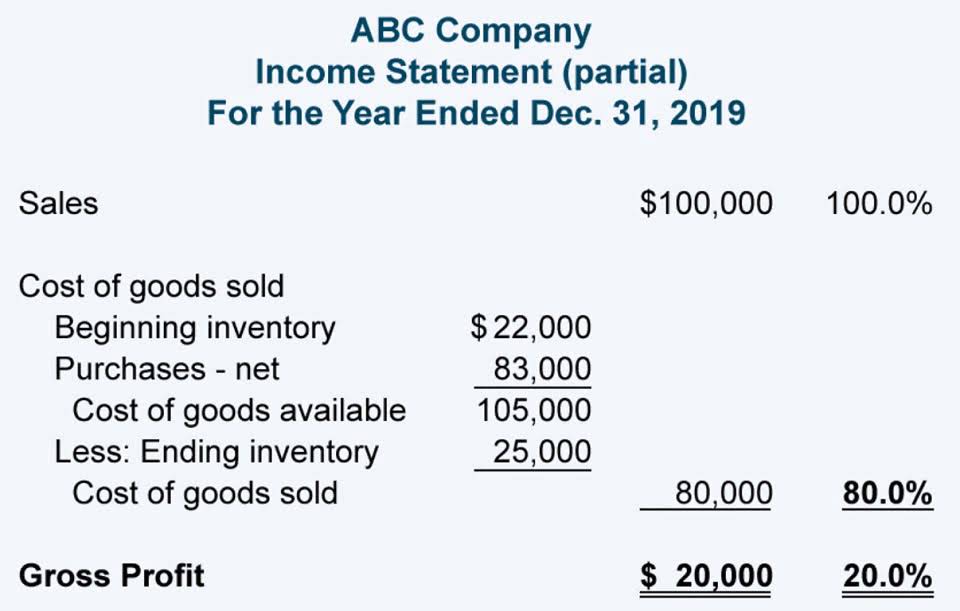
The double-declining-balance method requires the use of a depreciation rate that doubles the rate of a straight-line depreciation. For example, the straight-line depreciation rate for a 10-year asset would be 10 percent for each year, or one-tenth of the 100 percent full depreciation rate. As a result, the depreciation rate for the double-declining-balance method would be doubled to be 20 percent.
- For example, if the fixed asset’s useful life is 5 years, then the straight-line rate will be 20% per year.
- With DDB, you depreciate the asset at double the annual rate you would with the straight-line method.
- Continue this until the asset’s book value approaches its salvage value or until the asset is fully depreciated.
- Your industry, tax strategy and financial trajectory should all factor into your choice of depreciation method.
- The expected cash value at the end of the truck’s life is the truck’s estimated residual value.
- Yes, businesses can switch methods if they find another one suits their needs better.
Declining Balance Method of Depreciation Explained in Video
You should consult your own legal, tax or accounting advisors before engaging in any transaction. The content on this website is provided “as is;” no representations are made that the content is error-free. At Taxfyle, we connect individuals and small businesses with licensed, experienced CPAs or EAs in the US. We handle the hard part of finding the right tax professional by matching you with a Pro who has the right experience to meet your unique needs Bookkeeping for Startups and will handle filing taxes for you.
Cash Flow and Business Planning
The units of output method is based on an asset’s consumption of measurable units. It is most likely to be used when tracking machine hours on a machine that has a useful life of a given number of total machine hours. The depreciation expense calculated by the double declining balance method may, therefore, be greater or less than the units of output method in any given year. The key to calculating the double declining balance method is to start with the beginning book value– rather than the depreciable base like straight-line depreciation. The beginning book value is multiplied by the doubled rate that was calculated above.
Double Declining Depreciation Calculator
Depreciation rates between the two methods of calculating depreciation are similar except that the DDD Rate is twice the value of the SLD rate. In the depreciation of the asset for each period, the salvage value is not considered when doing calculations for DDD balance. From year 1 to 3, ABC Limited has recognized accumulated depreciation of $9800.Since the Machinery has a residual value of $2500, depreciation expense is limited to $10000 ($12500-$2500). As such, the depreciation in year four will be $200 ($10000-$9800) rather than $1080, as computed above. Also, for Year 5, depreciation expense will be $0 as the assets are already fully depreciated.
After the final year of an asset’s life, no depreciation is charged even if the asset remains unsold unless the estimated useful life is revised. We can incorporate this adjustment using the time factor, which is the number of months the asset is available in an accounting period divided by 12. To get a better grasp of double declining balance, spend a little time experimenting with this double declining balance calculator. It’s a good way to see the formula in action—and understand what kind of impact double declining depreciation might have on your finances.
Financial Consolidation & Reporting

Depreciation is the process of allocating the cost of a tangible asset over its useful life. It reflects the asset’s reduction in value due to wear and tear, obsolescence, or age. Depreciation helps double declining balance method businesses match expenses with revenues generated by the asset, ensuring accurate financial reporting.
First, determine the annual depreciation expense using the straight line method. This is done by subtracting the salvage value from the purchase cost of the asset, then dividing it by the useful life of the asset. To calculate the depreciation expense for the first year, we need to apply the rate of depreciation (50%) to the cost of the asset ($2000) and multiply the answer with the time factor (3/12). The most basic type contra asset account of depreciation is the straight line depreciation method. So, if an asset cost $1,000, you might write off $100 every year for 10 years.