



GUEST LECTURE
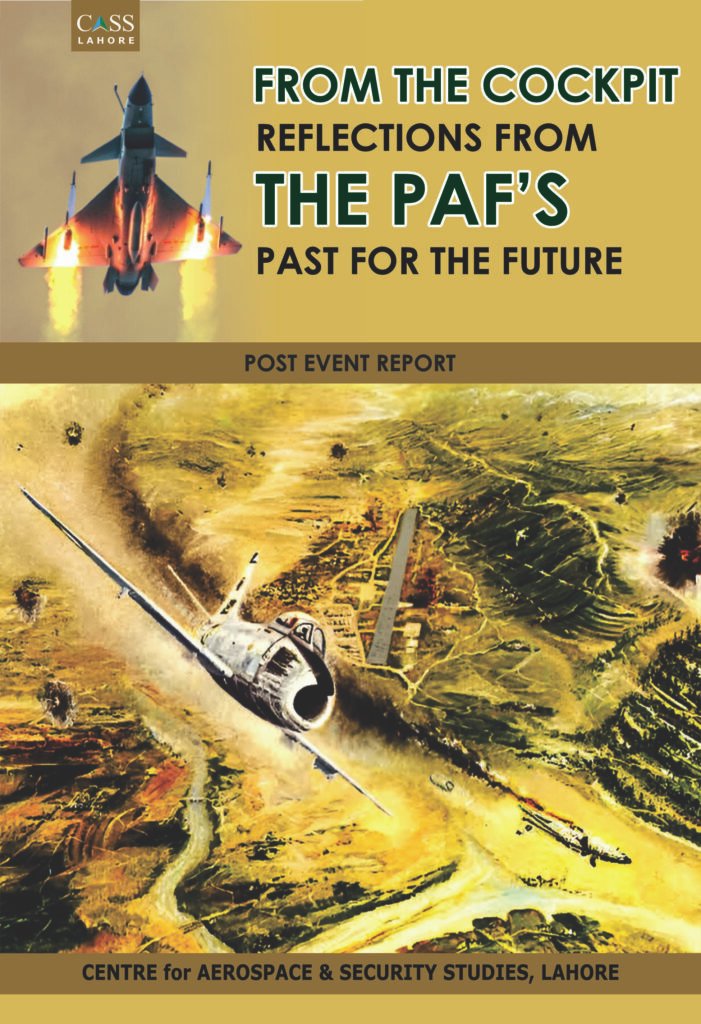
From the Cockpit: Reflections From the PAF’s Past for the Future
September 5, 2024
Wing Commander Saleem Baig Mirza (Retd)
Complete Guest Lecture Report is available upon request. Please use the button below to submit your request.
president
Air Marshal Asim Suleiman (Retd)
EVENT COORDINATOR
Ameer Abdullah Khan
EDITOR
Jawad Zulfiqar
MASTER OF CEREMONY
Meher Azfar Rana
RAPPORTEURS
Dr Zaheer Abbas, Naba Fatima, Muhammad Ahmad Bilal & Shayan Jamy
Executive Summary
Veteran fighter pilot, Wing Commander Salim Baig Mirza (Retd), delivered a guest lecture titled “From the Cockpit: Reflections from the PAF’s Past for the Future” at the Centre for Aerospace and Security Studies (CASS), Lahore, on 5 September 2024.
Air Commodore Khalid Chishti (Retd) initiated the session with a preamble on the 1965 and 1971 wars and also provided an introduction of the guest speaker. He set the tone for the event by highlighting the Pakistan Air Force’s (PAF) illustrious history and its role in shaping Pakistan’s defence capabilities. His introductory remarks set the stage for a discussion on how past experiences can guide and enhance future strategic directions.
Wing Commander Salim, reflecting on his far-reaching experience and engagement in significant historical events, offered a persuasive narrative of the PAF’s contributions during the wars. He provided a profound analysis of the strategies and tactics employed by the Air Force, highlighting the intricacies of aerial combat and the critical decisions that defined those conflicts. Through his narration of air operations, he highlighted the bravery, skill, and resourcefulness of PAF’s pilots, who operated under intense pressure and against challenging odds.
During his lecture, he explored significant operational features such as mission planning, training and execution of air strikes, highlighting the need of learning from both triumphs and impediments. The Wing Commander highlighted how the PAF’s experience in conflicts has been influential in evolving its contemporary policies and operational abilities. He also discussed the significance of adapting to technological advancements and underscored the importance of consistent learning and evolution.
He emphasised that understanding historical conflicts and operations, besides staying up-to-date on contemporary matters, is vital to anticipate and effectively react to emerging threats.
Later, during the interactive session, the audience, comprising both serving and retired military personnel, besides civilians, had the opportunity to explore several characteristics of the Air Force’s operational past and its existent strategic mindset.
The event concluded with closing remarks from Air Marshal Asim Suleiman (Retd), President CASS, Lahore, who emphasised the Air Force’s crucial role and status as the leadership’s preferred choice in contemporary warfare. He noted that all modern-day conflicts employ the air medium to achieve military objectives. He also mentioned PAF’s enduring legacy and steadfast dedication to national security.
The President further highlighted the ongoing strategic transformation of the PAF under the leadership of Chief of the Air Staff, Air Chief Marshal Zaheer Ahmad Babar Sidhu. He remarked that the PAF is now prioritising cutting-edge technologies and infrastructure to sustain its combat advantage, especially in light of increased defence spending by neighbouring countries like India.
Key Takeaways
- Leading by Example
PAF leaders have consistently led by example, inspiring their subordinates to exceed expectations. This played a decisive role in shaping the outcomes of the 1965 and 1971 wars.
- Strategic Excellence
Superior training, professional conduct, and technological advancements have allowed the PAF to overcome enemy numerical advantages, showcasing its operational proficiency and combat acumen.
- Tactical Adaptability and Operational Resilience
PAF’s continuous innovation, tactical adaptability, and operational resilience have enabled it to counter evolving threats and outperform technologically superior adversaries while maintaining effectiveness in the ever-changing dynamics of aerial combat.
- Psychological Impact
The significance of the psychological aspect of warfare was clearly demonstrated by the PAF’s early victories in the 1965 war, which significantly undermined the enemy’s morale while simultaneously boosting their own.
- National Pride
PAF evokes national pride and embodies resilience in times of conflict, exemplified by its pilots whose extraordinary performance fostered unity and elevated morale across the nation.
- Technological Evolution
An air force must continuously advance its technology, tactics, and training to remain competitive, as demonstrated by the PAF’s journey towards becoming a ‘next-generation’ Air Force.
- Legacy of Excellence
The PAF’s enduring strength is rooted in its legacy of resilience and excellence, founded on the principles of discipline, dedication, and adaptability. These values ensure its continued prowess and inspire future generations.
Policy Considerations
- Strategic Air Force Readiness
To respond effectively and swiftly to evolving security threats, PAF must enhance its readiness while maintaining tactical surprise against adversaries through strategic flexibility, quick response and comprehensive scenario planning.
- Strategic Technological Investments
The PAF must continue to invest its resources in advanced technologies, innovative strategies, and modernised capabilities to maintain its dominance amid rapidly evolving technologies and combat scenarios.
- Asymmetric Warfare Capabilities
The Air Force must further refine specialised strategies for operations that address asymmetric threats, such as hybrid warfare, to enable more effective responses.
- Enduring Legacy
The PAF should focus on public initiatives like media outreach and documentary projects that highlight its history and celebrate its legacy, enhancing national pride and addressing misinformation for future generations.
- Progressive Vision
To uphold the PAF’s tenacity, resilience and preparedness, its air doctrine must prioritise the advancement of research and development with emerging technologies, the integration of innovative combat strategies, and regular threat assessments, thereby solidifying its stature as a next-generation air force.
CASS LAhore

The Centre for Aerospace & Security Studies (CASS) was established in July 2021 to inform policymakers and the public about issues related to aerospace and security from an independent, non-partisan and future-centric analytical lens.
CASS Newsletter

- Home
- About Us
- Research Domains
- Publications
- Events
- Gallery
- Contact Us
@2021 - All Right Reserved. Designed and Developed by PenciDesign