
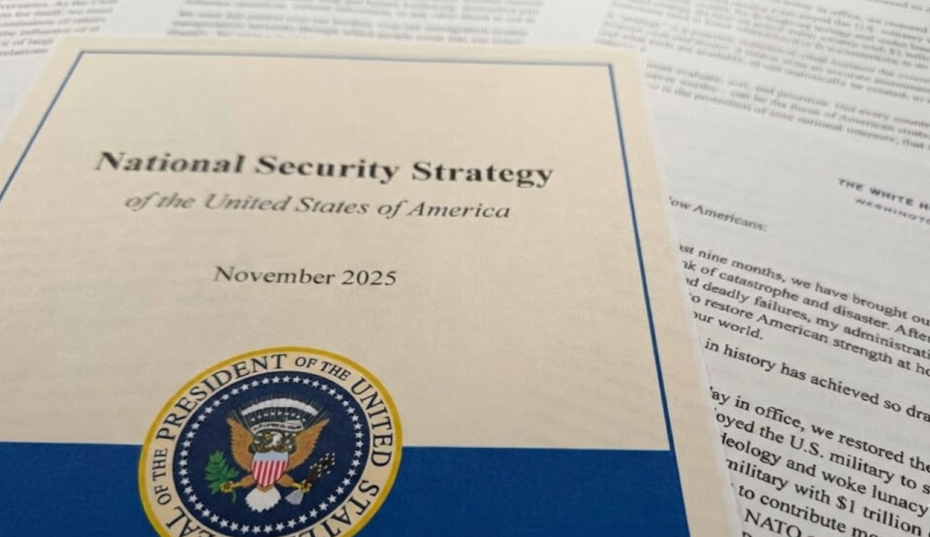


Pakistan-India rivalry, regional conflicts, and great power competition remained the defining features of South Asia in 2025. However, strategic blueprints often ignore these complexities, framing objectives and policies around securitised issues and challenges. Similar is the case of the US National Security Strategy (NSS) 2025, which continues to designate India as the centrepiece of the US Indo-Pacific vision.
The NSS emphasises enhanced defence cooperation, long-term collaborations, and greater interoperability with India. However, the ground realities are different as Pakistan-US cooperation touched new heights following the Pakistan-India war in May 2025.
Ever since, Pakistan has been at the forefront of the US efforts in the region, ranging from counterterrorism to rare earth minerals and regional diplomacy. Indo-US relations, on the contrary, have been on a downward trajectory. This evident gap between policy discourse and operational reality highlights a crucial blind spot and analytical loophole in the latest American NSS.
Lately, the US has realised that Pakistan’s relevance is hard to ignore in critical areas like regional security and stability. Against this backdrop, the US approved a USD 686 million package to modernise Pakistan’s F-16 fleet, aimed at advancing mutual interests like counterterrorism, airspace security, and regional deterrence.
This deal highlights continued military-technical interdependence between the two long-time allies. Similarly, a bilateral trade agreement further strengthened economic cooperation, aiming to explore Pakistan’s energy and mineral sectors. The minerals deal was, in particular, an indicator of sustained engagement beyond narrow security issues.
Counterterrorism also continues to be the major point of convergence. Pakistan has formulated the National Intelligence Fusion and Threat Assessment Centre (NIFTAC) as a specialised intelligence centre and counterterrorism unit to ensure real-time coordination with its US counterparts. All these measures demonstrate the state’s operational skills and capabilities to assume an active role in regional stability.
To the contrary, India’s persistent regional security provider status does not align with empirical realities. Although the US-India relations across the defence sector intensified through the extended framework arrangements in 2025, strategic boundaries were observed in many situations. The independent military reasoning of New Delhi, including expeditious modernisation and offensive operational posture, formulated its engagement with Washington.
This became particularly evident in the May 2025 war, which ended with New Delhi’s defeat, highlighting the operational limitations of Indian capabilities in an actual conflict scenario. The Indian government has also consistently understated the US role in brokering the ceasefire, signifying that the Indo-US alignment is neither innate nor holistic. Together, these trends create a larger picture; the NSS narrative presents India as a strategic anchor, but ground realities and diplomatic postures depict otherwise.
Pakistan’s strategic salience also stems from the region’s structural realities. Its geostrategic location, alongside its evolving role in regional security, escalation control, and deterrence stability, makes continued engagement with Pakistan a strategic goal rather than a political compromise. This justifies why cooperation continues on the ground despite the apparent selectivity of formal strategic documents.
The strategy’s approach to the region can be seen as an expression of a more general trend to render regional politics subservient to the logic of great-power competition. Even when mentioned, Islamabad appears largely in the context of Pakistan-India ceasefire, instead of as an individual strategic player.
Likewise, all other consequential regional variables, such as instability in Afghanistan and Bangladesh’s increasing strategic and economic weight, receive cursory attention. This structuring places greater emphasis on alignment with the narrative rather than engagement with the granular agents of volatility that continue to characterise South Asia. Resultantly, Washington undermines its own capability to determine outcomes on matters, including counterterrorism, nuclear risk minimisation, and conflict mediation.
However, Pakistan must not attribute undue significance to a non-binding White House document, which often reflects domestic political signalling as opposed to a settled policy. To date, Pakistan has managed the complexities of its relationship with the US with greater consistency than many similarly situated states, with periods of divergence managed without total disengagement.
Regardless, Pakistani policymakers should remain cautious of the sustained influence of the Indian lobby in shaping the US congressional debates, think tank publications, and policy framing. Pakistan should not react through concern, but rather engage on a sustained and measured basis that takes into consideration these realities without necessarily sacrificing Pakistan’s own security and regional interests.
In conclusion, the US NSS 2025 reflects Washington’s strategic inclinations, but it oversimplifies the situation in South Asia. To effectively engage in the region, it is necessary to reduce the gap between the declaratory strategy and operational practice, value partnerships that deliver results, recognise the constraints of formal alignments, and incorporate a granular understanding of regional actors into strategic planning.

Faiza Abid
The writer is a Research Assistant at the Centre for Aerospace and Security Studies (CASS), Lahore.
Originally Published in Stratheia.
CASS LAhore

The Centre for Aerospace & Security Studies (CASS) was established in July 2021 to inform policymakers and the public about issues related to aerospace and security from an independent, non-partisan and future-centric analytical lens.
CASS Newsletter

@2025 – All Right Reserved with CASS Lahore.

- Home
- About Us
- Research Domains
- Publications
- Events
- Gallery
- Contact Us
@2021 - All Right Reserved. Designed and Developed by PenciDesign