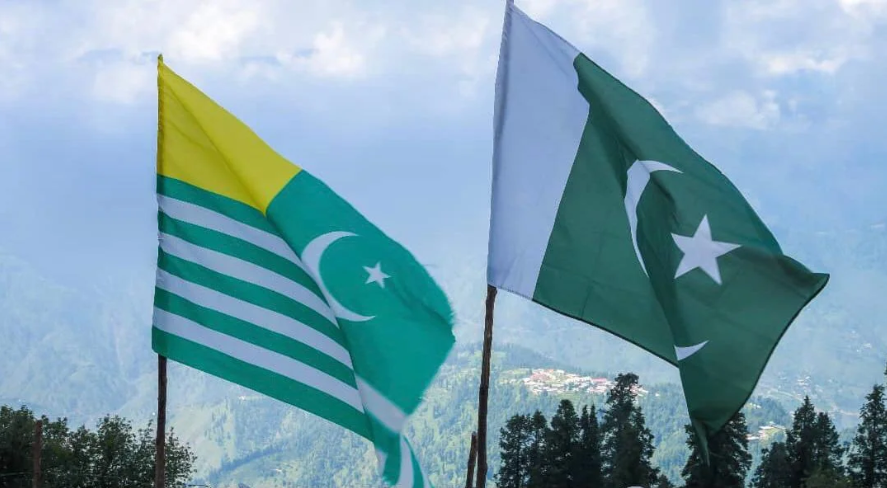


On 5 February 2026, Pakistan once again observes Kashmir Solidarity Day, a national testament to its enduring bond with Kashmiris and a collective resolve to the Kashmiri cause. On this day, Pakistanis from all walks of life come together in rallies, seminars and human chains that symbolise shared pain and hopes. The commemoration of this day is a reminder that support for Kashmir by Pakistan is a pledge which is grounded in brotherhood and justice. In 1990, this day was selected to protest against the crackdowns conducted by the Indian military in Kashmir. Today, that legacy endures as Pakistan continues to amplify the Kashmiri voice on the world stage.
Yet while Pakistanis affirm unity at home, the people of Indian Illegally Occupied Jammu and Kashmir (IIOJK) endure a brutal reality. Since 5 August 2019, the Hindu nationalist Bharatiya Janata Party (BJP) government in New Delhi has unleashed an unprecedented siege on Kashmir. In one swift stroke, it revoked Article 370, abrogating Kashmir’s decades of autonomy. An indefinite curfew was imposed, local leaders and critics were jailed under draconian laws, and communications, including phones, the internet and newspapers, were cut off. Kashmiris were effectively put under military lockdown; thousands of troops flooded the region, roads were sealed with razor wire, and even basic necessities, from hospital visits to funeral prayers, required military permission. As international observers noted, journalists languish in prison, social media sites are blocked, and there is widespread imprisonment without trial.
India’s actions have fundamentally targeted Kashmir’s identity. By scrapping Article 35A in tandem with the revocation, the government granted all Indians the right to buy property and permanently settle in Kashmir. Critics have rightly identified this as calculated demographic engineering meant to bring about a “demographic shift” aimed at diluting the Muslim-majority character of the Valley. In fact, revoking Kashmir’s special status was aligned with the longstanding goals of Hindu nationalists in New Delhi. These sweeping changes, including the imposition of two unfettered Union Territories without local consent, were designed to integrate Kashmir into a “Hindu Rashtra,” diluting not only its politics but its very soul.
The human cost has been immense. International rights groups have documented rampant abuses: arbitrary detention, torture, extrajudicial killings and enforced disappearances have become commonplace. Amnesty International reports that since 2019 the Indian government has “drastically intensified the repression” of Kashmiris, with curbs on free speech, movement and assembly carried out with “absolute impunity. Similarly, Human Rights Watch confirms that five years on, New Delhi still has not restored basic freedoms in IIOJK; instead, security forces continue “repressive policies including arbitrary detention, extrajudicial killings, and other serious abuses”. Hundreds of Kashmiri students, activists, and even lawyers, have been jailed under preventive laws, while the media has been silenced. Dozens of Kashmiri journalists have been harassed, arrested or forced out, with reporting allowed only from government-controlled press centres. Under constant curfew and surveillance, ordinary Kashmiris live in fear, and even a WhatsApp message can land a person in jail.
Every plea for normalcy and basic human rights has been rejected. World powers, preoccupied with geopolitics, have often turned a blind eye as India’s Hindutva-driven regime tightens its grip. In New Delhi’s own rhetoric, Kashmir is an “internal matter,” but in practice, it has put Kashmir under a permanent state of martial law. Even notices taken by the United Nations (UN) have not yielded any concrete results against the backdrop of the atrocities and human rights violations.
Pakistan’s position is clear and consistent: the Kashmiri struggle is both morally righteous and legally justified. The demands of the Kashmiris, for dignity, autonomy and a chance to decide their destiny, are fully in accord with international law. Pakistan has often repeated its position in favour of an UN-sanctioned plebiscite, a peaceful process in which Kashmiris themselves decide their own future. This advocacy by Pakistan has won in international forums from the UN to the OIC, both of which have urged the implementation of UN Security Council resolutions on Jammu and Kashmir. Such resolutions enshrine the Kashmiri people’s inalienable right to self-determination. The justness of the Kashmiri cause is unmistakable to anyone who believes in justice and human rights.
On the diplomatic, legal, and multilateral forums, Pakistan continues to raise its voice for Kashmir. However, no single country can compel accountability in the face of sustained international indifference. India will continue to violate human rights and international law until the international community takes a principled stance. A just and durable resolution now depends upon a collective global awakening.
On this Kashmir Solidarity Day, Pakistan stands unwavering with IIOJK. This day is a summons to justice, not a hollow ceremony. Pakistan’s dedication to Kashmir is here to stay beyond speeches and parades. Pakistan will go on to lend moral, diplomatic as well as humanitarian assistance until the people of Kashmir can breathe free once again. Pakistan will continue to remind the rest of the world that peace in the region is inextricably linked to by the recognition of the inalienable rights of the Kashmiri people. Justice is an uphill struggle, but a righteous one.
Abdul Wassay
The writer is a Research Assistant at the Centre for Aerospace and Security Studies (CASS), Lahore.
Originally Published in Centre for Strategic and Contemporary Research (CSCR).
CASS LAhore

The Centre for Aerospace & Security Studies (CASS) was established in July 2021 to inform policymakers and the public about issues related to aerospace and security from an independent, non-partisan and future-centric analytical lens.
CASS Newsletter

@2025 – All Right Reserved with CASS Lahore.

- Home
- About Us
- Research Domains
- Publications
- Events
- Gallery
- Contact Us
@2021 - All Right Reserved. Designed and Developed by PenciDesign