


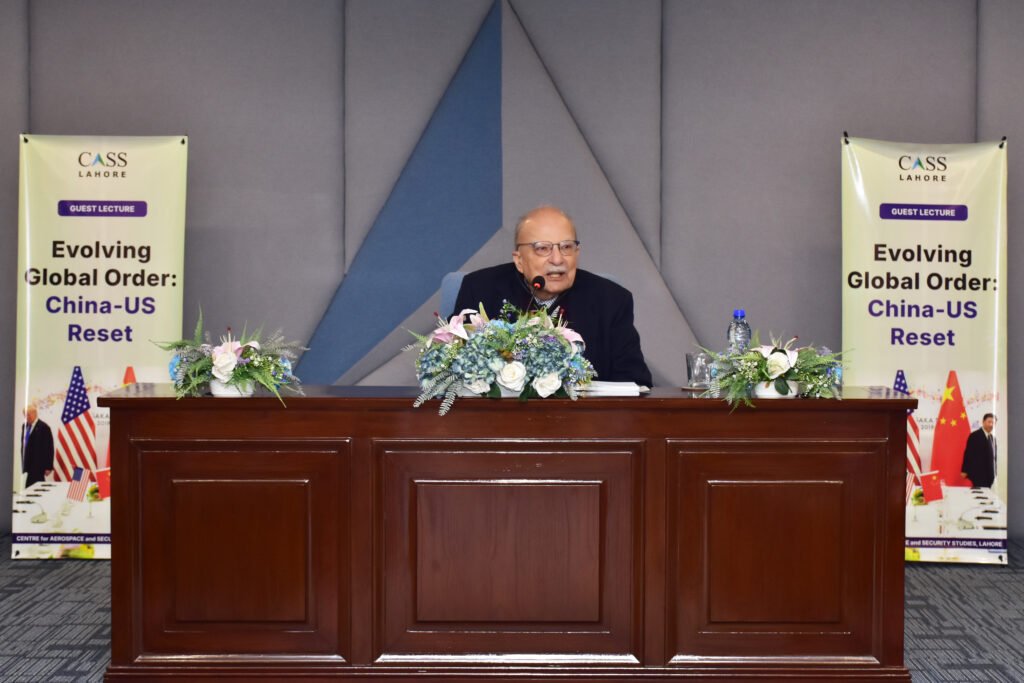
Guest Lecture
Evolving Global Order: China-US Reset
January 7, 2026
The guest talk analysed the evolving global order amid the China–US reset, highlighting growing strategic rivalry, economic competition, and shifting power dynamics. It also discussed the implications for global stability and for middle powers like Pakistan in navigating emerging challenges and opportunities.
About The Event
The contemporary global geostrategic, political, and economic environment is changing rapidly and shaping a new international order. The world is transitioning from a wave of globalisation and liberalisation to regionalisation and protectionism. The rise of the East is redefining the hegemonic drift. In this regard, the world’s two largest economies and leading geopolitical powers, China and the US, are repositioning or resetting their respective role in maintaining the balance between competition and cooperation.
The China-US nexus characterises the most consequential bilateral dynamics in the recent international relations scenario. The nature of their mutual engagement deeply forms patterns of global trade, technological advancement, security architectures, and regional stability. However, domestic and international challenges call for pragmatic diplomacy and harmony to stabilise economies and achieve inclusive development.
Recent times have witnessed significant volatility in their relationship, characterised by trade wars, strategic rivalry, technological competition, and divergent approaches to international institutions and the Indo-Pacific region. However, the current US regime offers a critical juncture for reassessing bilateral relations and exploring pathways toward constructive engagement and shared prosperity. In this regard, the issues of global imperialism, the new mercantilism, multipolar chaos, and emerging minilateralism require adequate explanation for the holistic understanding of the concepts.
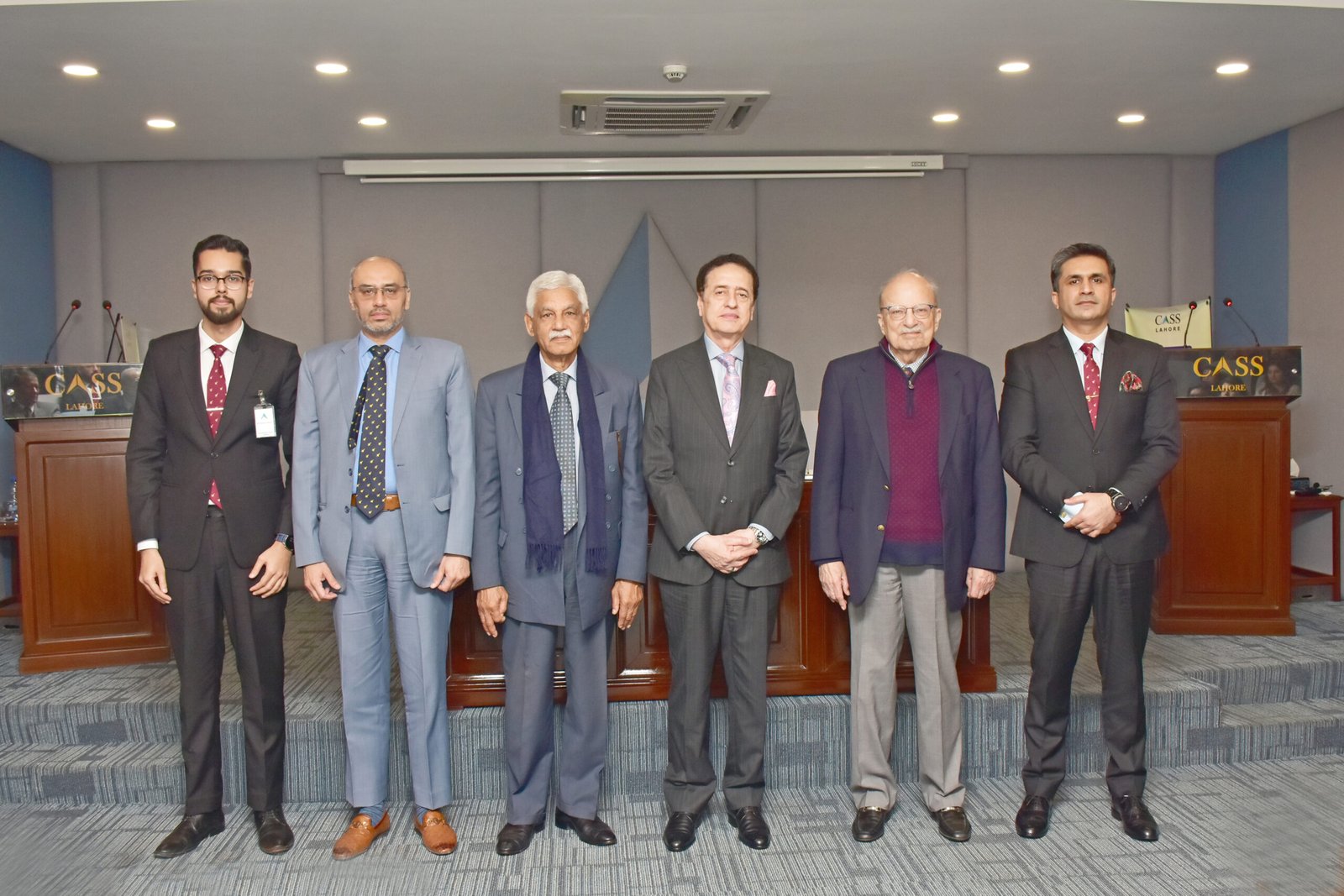
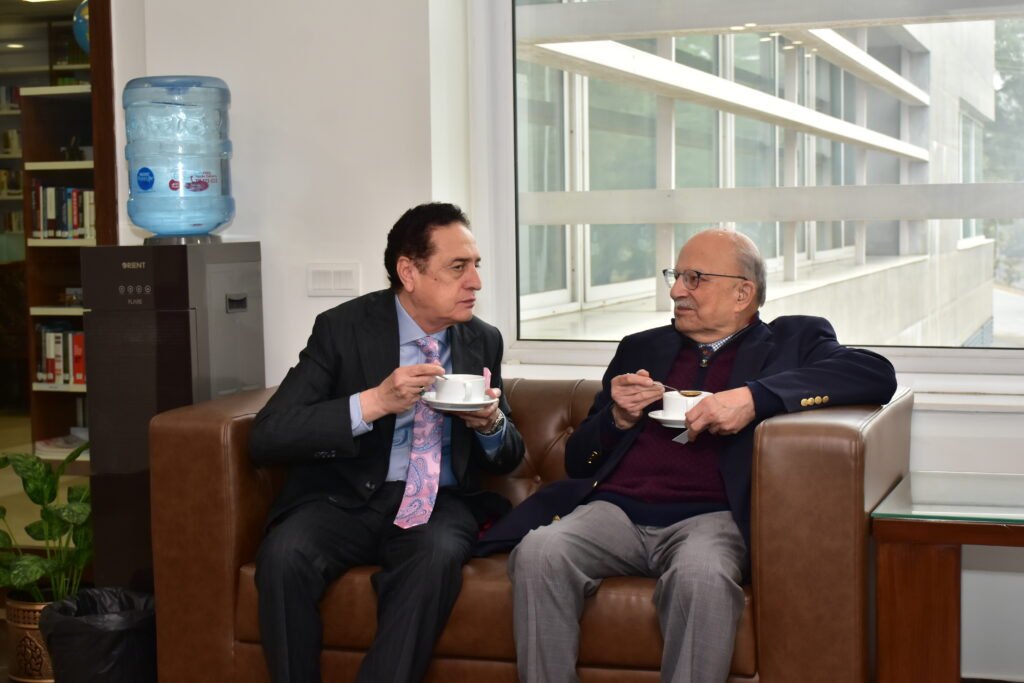
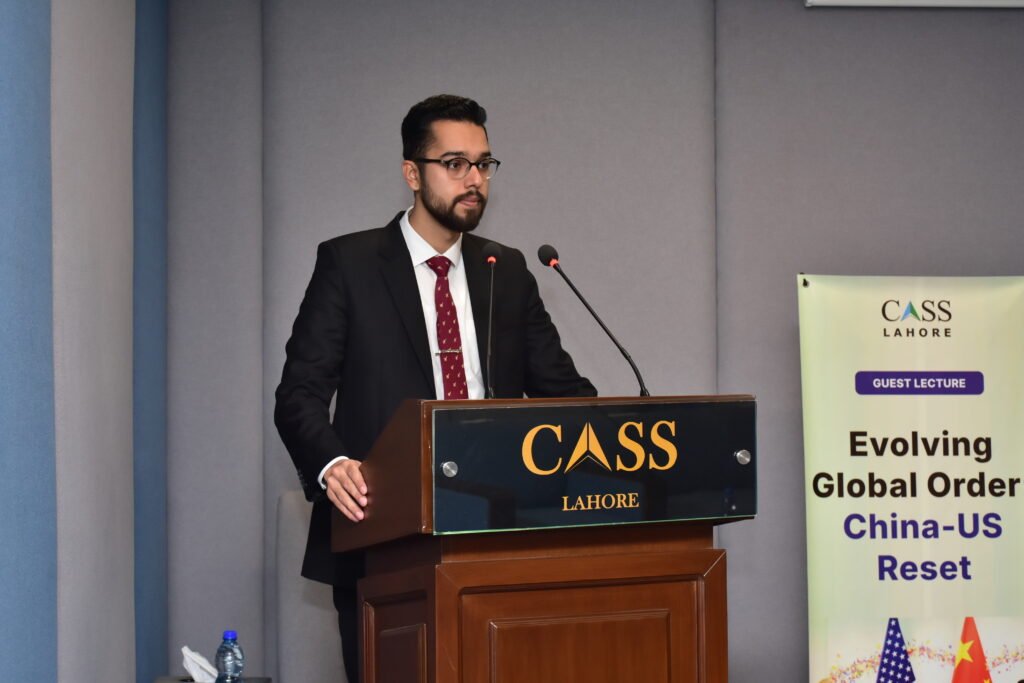
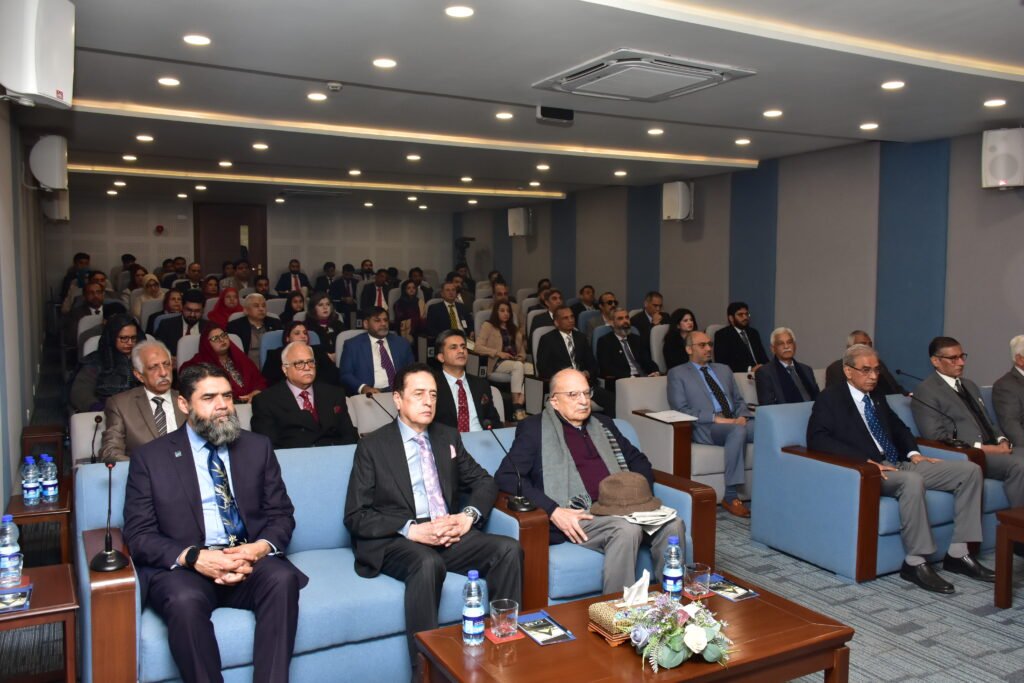
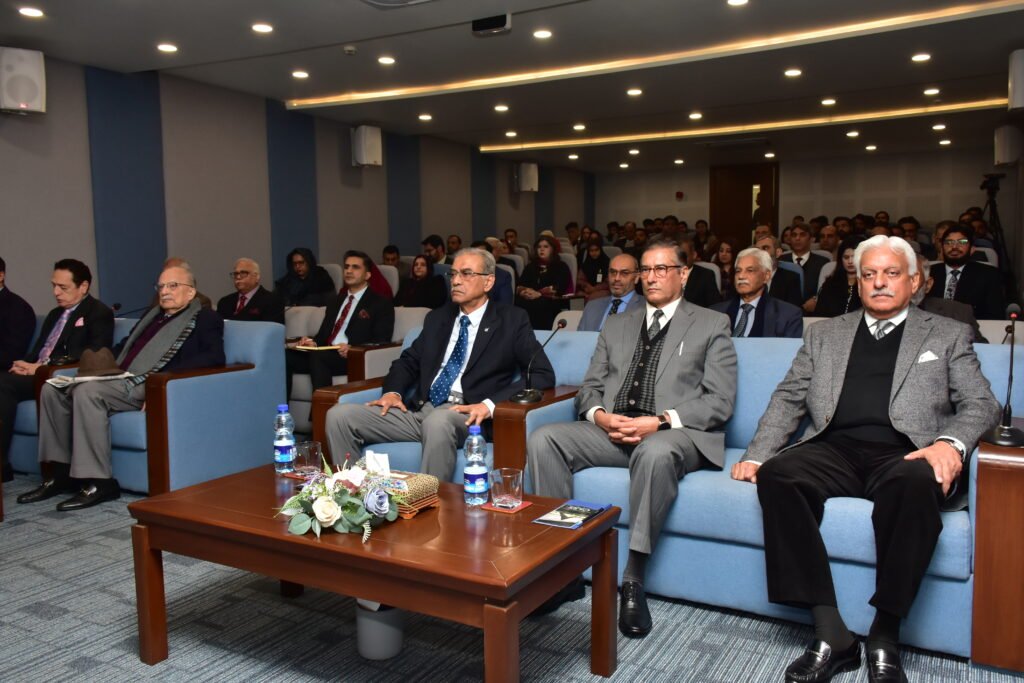
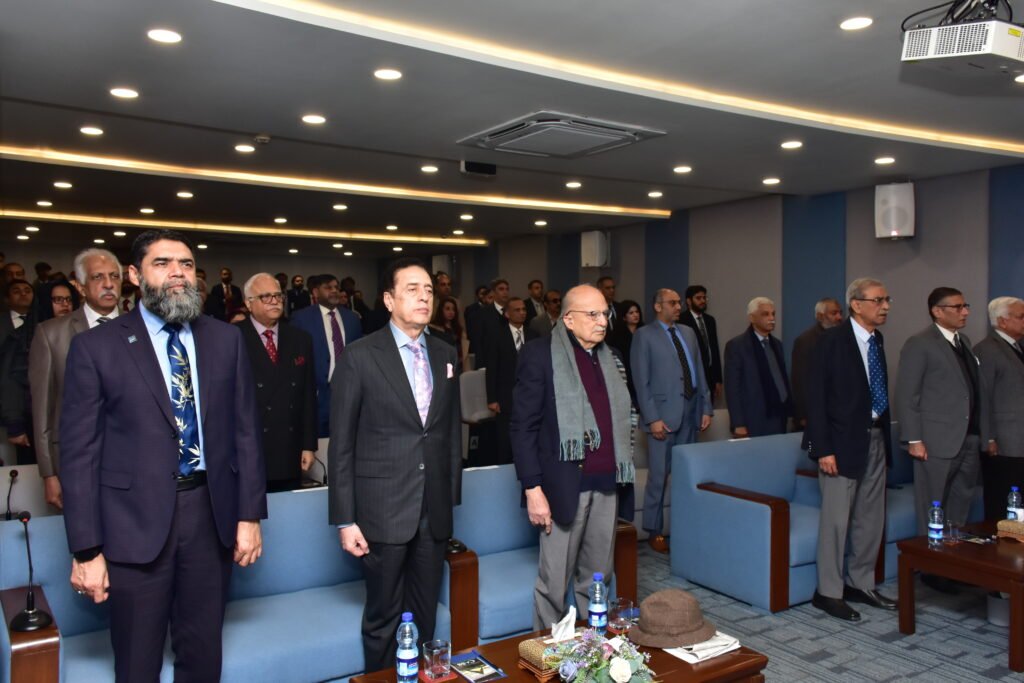
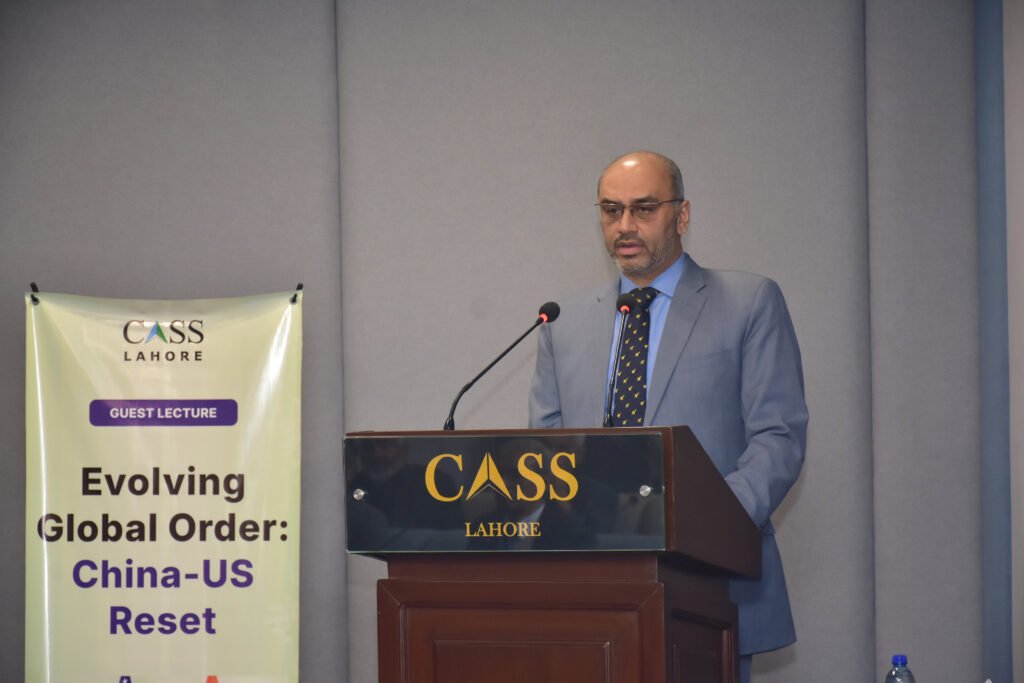
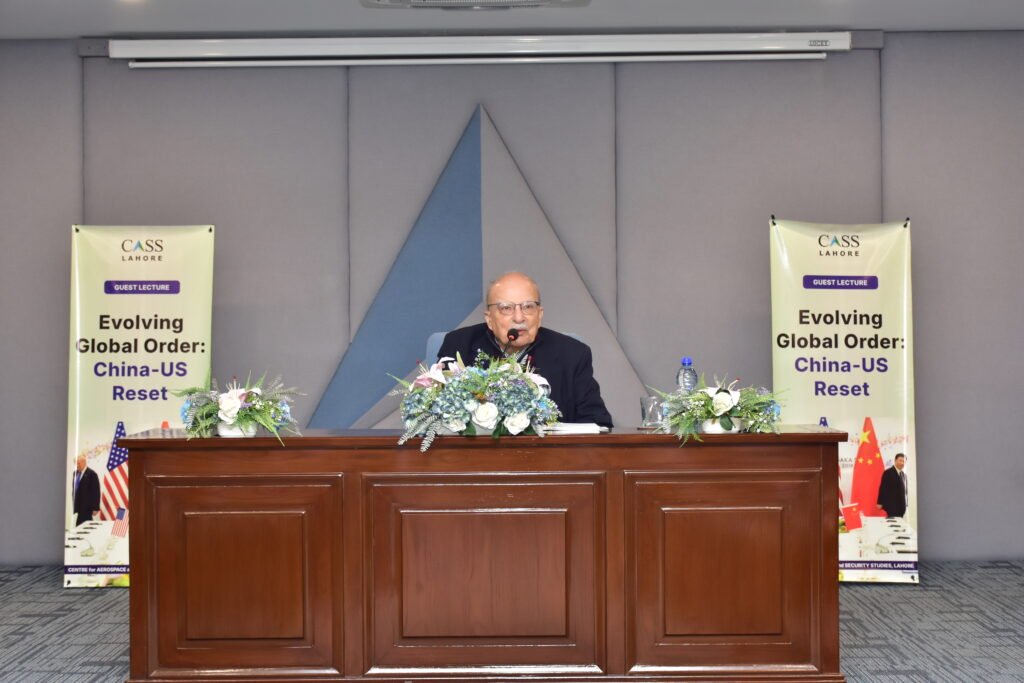
In light of evolving global political, geostrategic, and economic dynamics, the Centre for Aerospace and Security Studies (CASS), Lahore, organised a guest talk titled “Evolving Global Order: China-US Reset.” The session featured Mr Shahid Javed Burki, Chairman of the Burki Institute of Public Policy (BIPP) and former Vice President of the World Bank, a leading economist and distinguished authority on international political economy. The discussion offered a renewed analytical perspective on managing strategic competition and bilateral cooperation between China and the US, while examining the broader implications of this relationship for the emerging global order and for international and regional stability.
Key Takeaways
- Shift towards a Contested Bipolar Global Order
The global order is transforming from US unipolarity to a continued China-US rivalry, placing Pakistan in a challenging position where great power competition increasingly shapes geoeconomic and security choices.
- China’s Structural Rise is Driven by Economic Progress
China’s state-driven and centralised economic system, sustained technological progress, connectivity strategy, and economic development demonstrate a long-term trajectory that Pakistan must engage with as an enduring feature of the global system rather than a transient phase.
- Multilateral Institutions are Geopoliticised
Global financial institutions are no longer insulated from great-power politics, constraining Pakistan’s policy space and reinforcing the need for diversified external economic partnerships.
- Inter-connectivity Serves as a Strategic Power
Projects such as CPEC illustrate how cross-country connectivity infrastructure now functions simultaneously as socio-economic development support and geopolitical leverage within the China-US reset and emerging global order.
- Economic Statecraft Dominates Rivalry
Tariffs, economic sanctions, export controls, and critical mineral access define contemporary competition between global powers, exposing Pakistan to supply-chain shocks and strategic pressure from both ends.
- Information Warfare is a Strategic Vulnerability
Narrative manipulation and disinformation campaigns targeting Pakistan-China strategic and economic cooperation adversely affect investor sentiments and amplify domestic instability and economic fragility.
- Demographic Dividend as a Strategic and Economic Asset
Pakistan’s youth may offer strategic value to China’s ageing population, but also pose governance risks if not properly utilised through skill development and employment opportunities, which remain underdeveloped.
- Pakistan is a Geostrategic Fulcrum, not a Bystander
Situated at the intersection of Chinese connectivity ambitions and Western market access, Pakistan occupies a pivotal global position, shaping the regional interface within the evolving global order.
Policy Considerations
- Institutionalising Strategic Non-alignment
Pakistan needs to normalise its relationship with global powers. This preserves geostrategic cooperation, enhancing access to China while maintaining economic relationships with the US and European markets.
- Strengthening CPEC Governance
Strengthening transparency, the regulatory framework, and the commercial approach in CPEC 2.0 is essential to attract diverse investment, sustain Chinese investment, and reduce external and domestic criticism.
- Protecting Policy Autonomy in Multilateral Engagements
Pakistan must build internal capacity to negotiate with international financial institutions without allowing geopolitical pressures to override developmental priorities.
- Enhancing State Capabilities in Information-Warfare
Developing credible strategic communication, media literacy, and regulatory mechanisms are required to shield Pakistan’s national interest and external engagements from narrative sabotage.
- Treating Critical Minerals as Strategic Economic Assets
Pakistan should integrate rare-earth and other mineral resources into a long-term industrial strategy aligned with China and the US.
- Leveraging Demographic Advantage with China
Structured skills training, technology transfer, and labour mobility arrangements can convert Pakistan’s youth bulge into a strategic and economic advantage within the China-US reset.
- Enhancing Regional Connectivity to Reduce Securitisation
Framing the CPEC 2.0 as a regional integration platform linking Central Asia and other regional counterparts can mitigate perceptions of exclusivity and geopolitical alignment.
- Embed Strategic Literacy in Decision-Making
Pakistan’s policymakers elite must prioritise long-term analysis, reading culture, and institutional memory to navigate the structural shifts of the emerging global order.

Post Event Report
A comprehensive report capturing expert analyses, strategic insights, key recommendations, media coverage, and event highlights.
Guest Speakers
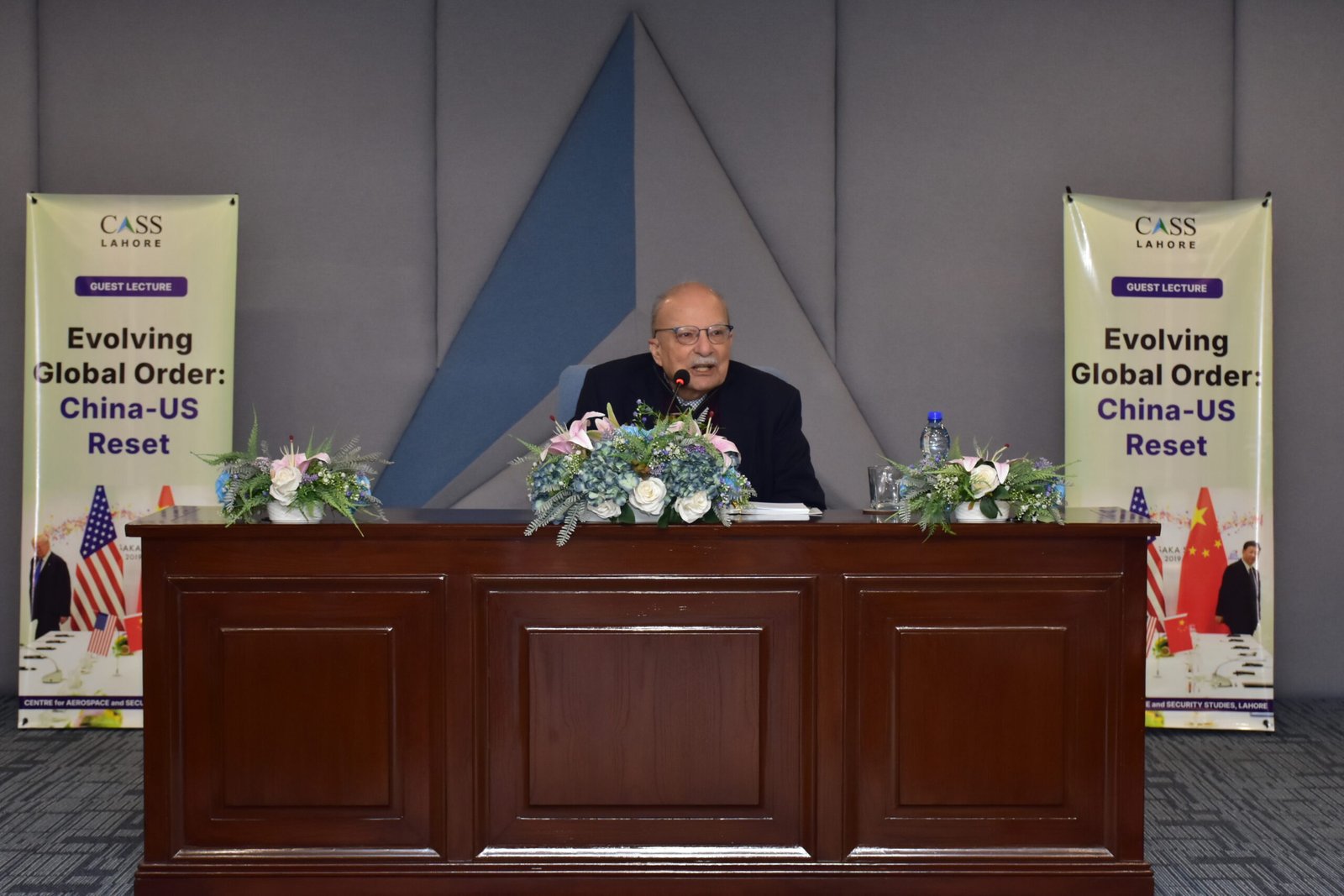
Mr Shahid Javed Burki
Shahid Javed Burki is a distinguished Pakistani-American professional economist and internationally respected public policy and political economy expert. His illustrious career spans over six decades of service to international development and Pakistan’s economic policy. He held pivotal positions and senior leadership roles in academia, government, and global financial institutions. A former Vice President of the World Bank and Pakistan’s Finance Minister, Burki has been widely recognised for his incisive analysis of economic development, governance reforms, and South Asian political economy.
Mr Burki has managed a number of large programs and projects including the ‘West Pakistan Rural Works Program’, as well as the foreign and international programs pertaining to foreign investment in developing small scale industries in China, privatisation of housing, building of highways net, reforming of the Banking sector, and rural development. A Rhodes Scholar at Oxford University and Mason Fellow of Harvard University’s Kennedy School, he holds degrees in physics, economics, and public administration.
Burki has authored numerous influential books on Pakistan’s political and economic history as well as economic development of China, Latin America, and global economy. He continues to shape public discourse through his role as Chairman of the Shahid Javed Burki Institute of Public Policy at NetSol (BIPP), Lahore and as a regular contributor to leading international publications including The Express Tribune, Financial Times, and Project Syndicate.
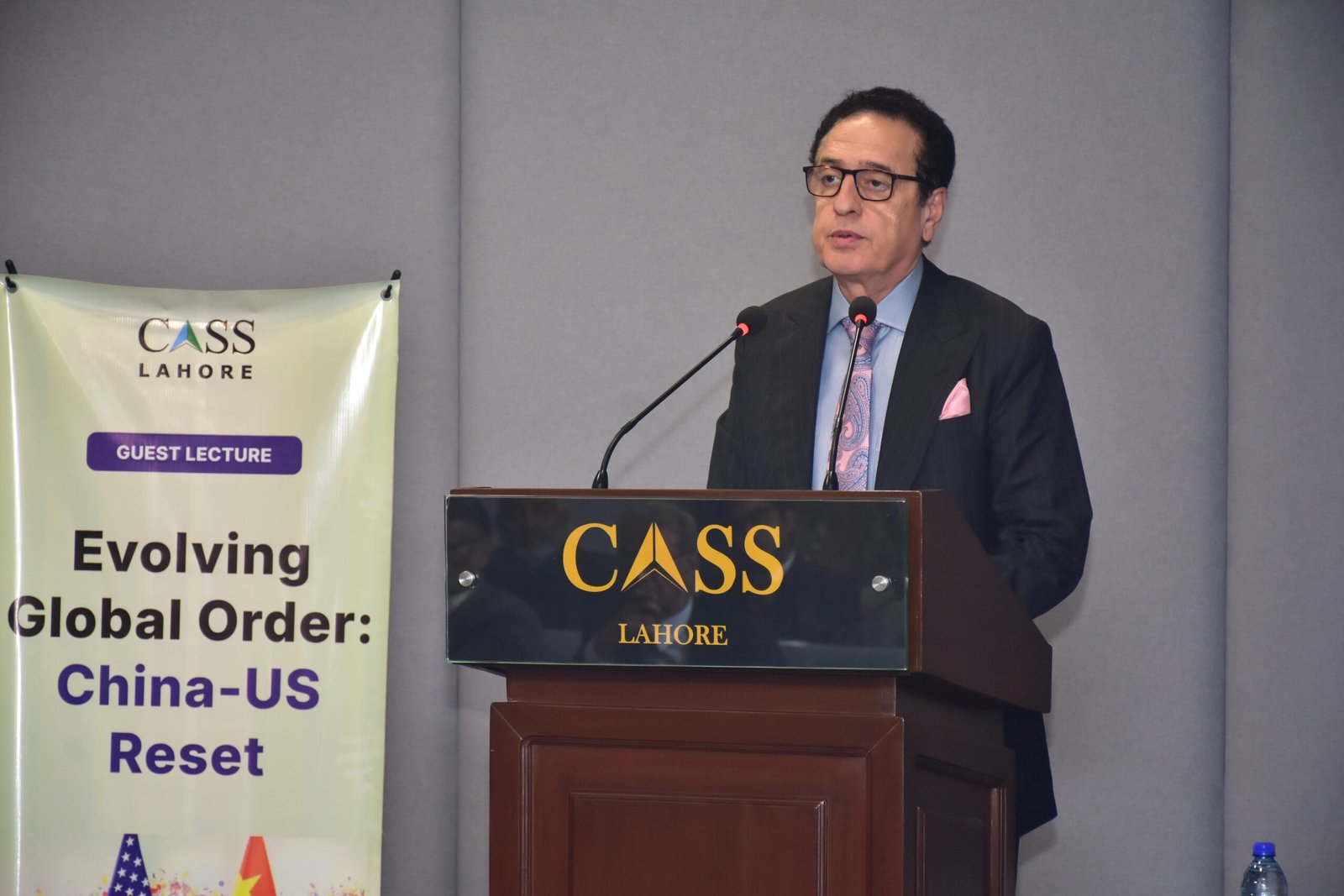
Event Chair
Air Marshal Asim Suleiman (Retd)
President, CASS Lahore
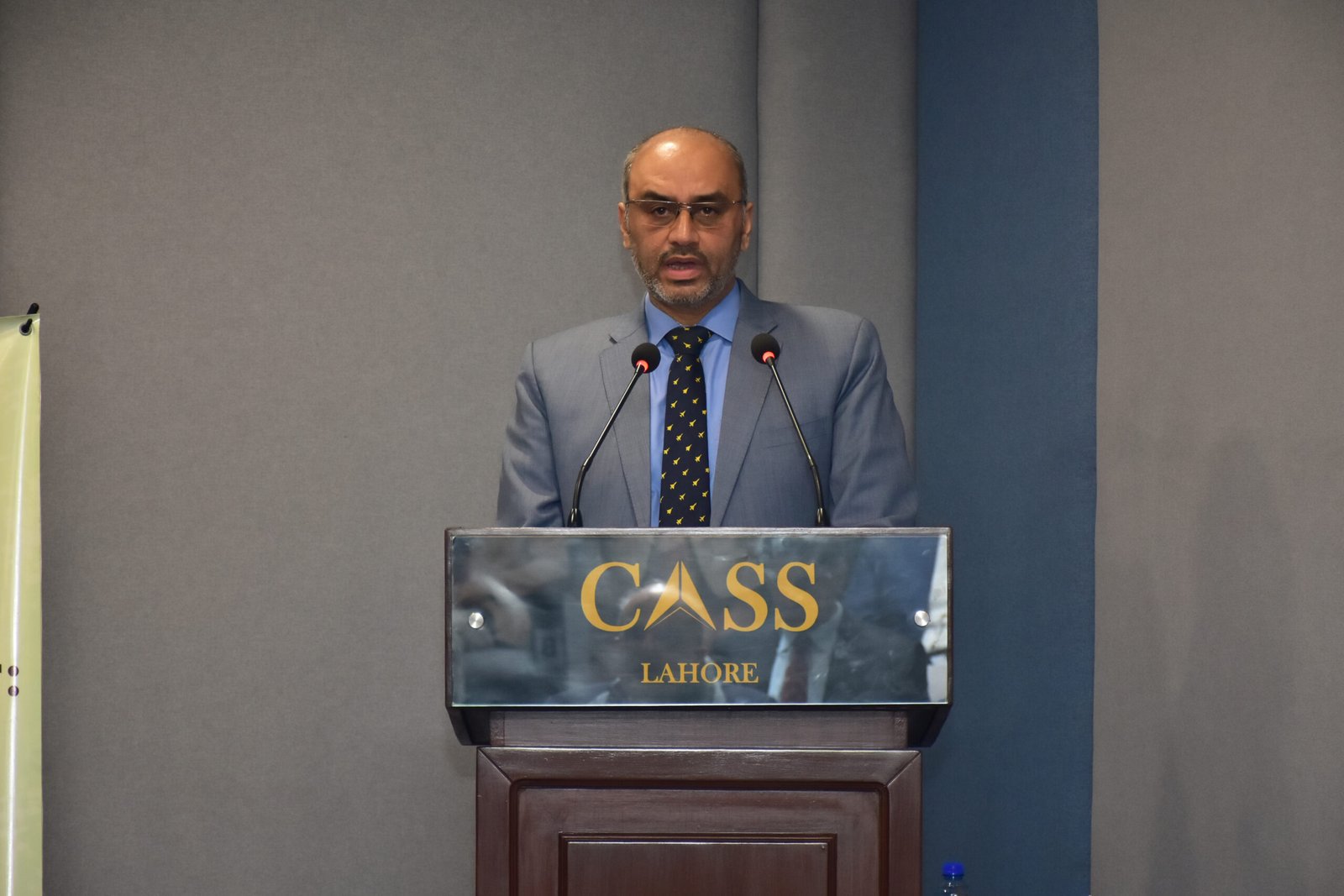
Event Coordinator
Dr Ahsan Abbas
Director Economy, CASS Lahore
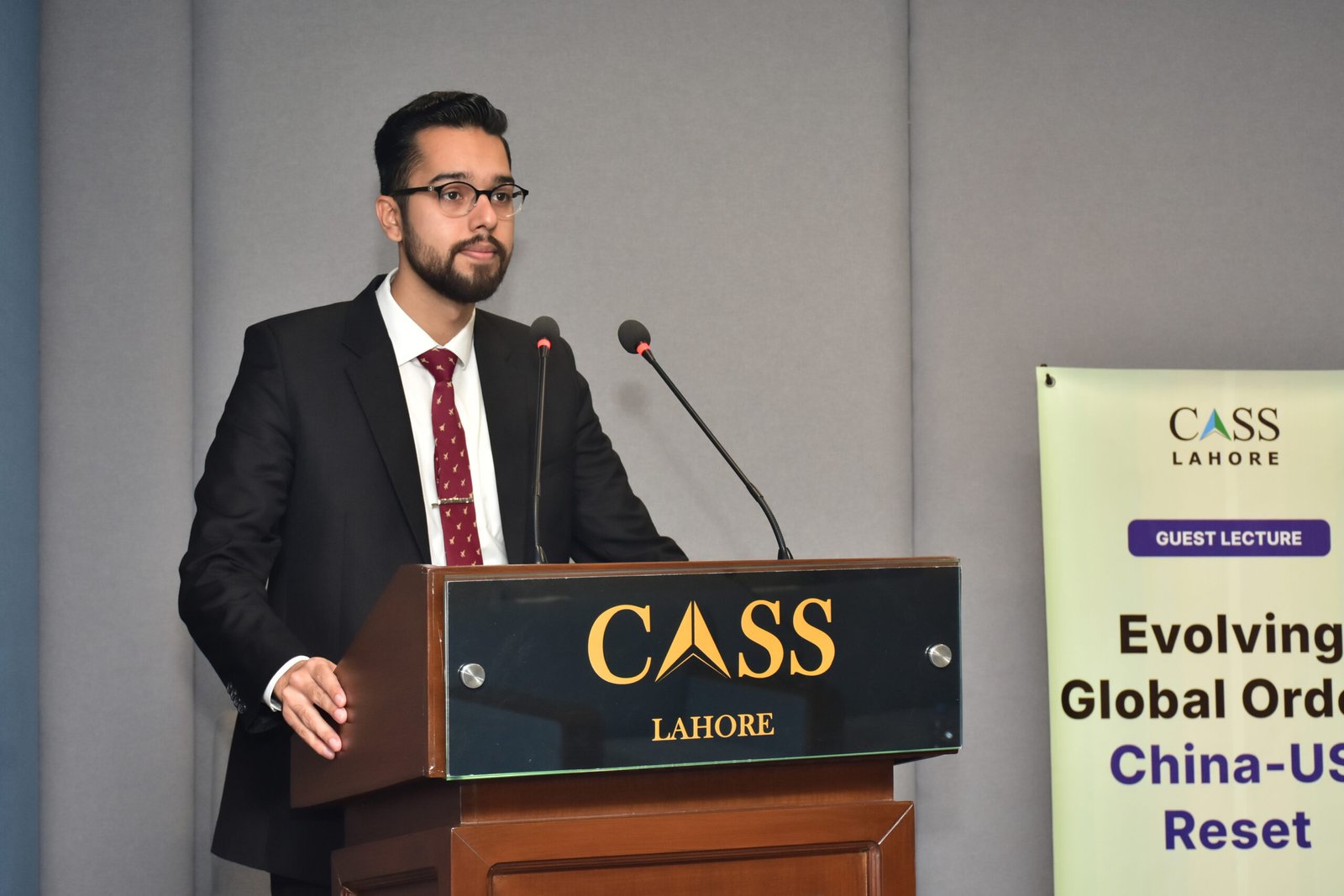
Master of The Ceremony
Mr Najam ul Hassan
Research Assistant, CASS Lahore
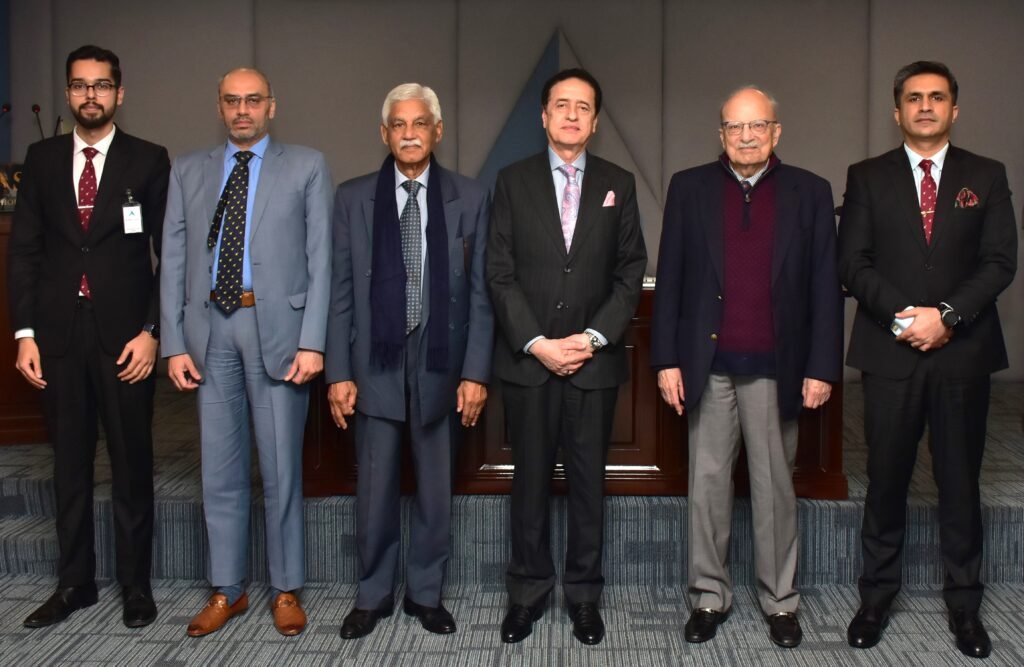
CASS LAhore

The Centre for Aerospace & Security Studies (CASS) was established in July 2021 to inform policymakers and the public about issues related to aerospace and security from an independent, non-partisan and future-centric analytical lens.
CASS Newsletter

@2025 – All Right Reserved with CASS Lahore.

- Home
- About Us
- Research Domains
- Publications
- Events
- Gallery
- Contact Us
@2021 - All Right Reserved. Designed and Developed by PenciDesign