


Recent Pakistan-India wars indicate that air power will remain central to conflicts between two countries for the foreseeable future. Against an authorisation of 42 squadrons, the Indian Air Force (IAF) maintains less than 30 squadrons. While IAF is endeavouring to compensate for declining numbers through the induction of indigenously developed Tejas, no quick-fix for high-end 5th-Gen fighter aircraft is available. Having suffered manned and unmanned aircraft losses in Operation Sindoor India’s push for indigenous development as well as procurement of long-range high-tech missiles indicates a doctrinal shift in Indian military thought process, with implications for future conflicts.
Historically, for combat aviation, manned aircraft have remained a key instrument for kinetic application. Quick to react, carrying wide range of payloads coupled with the flexibility to perform various offensive and defensive roles, they have emerged as a powerful tool for signalling across escalation ladder. With humans in the loop, they can be employed for both coercive diplomacy and warfighting, when required. It, however, is incredibly challenging, expensive and time consuming to achieve an optimum level of operational readiness. While the procurement of equipment and the development of required infrastructure are cost intensive, there is no shortcut to training the highly skilled operational and life-cycle-support human resource. Equipment can be developed indigenously, or procured off-the-shelf from international manufacturers; but to establish an operational eco-system and converting it into a potent warfighting capability requires decades of sustained, painstaking hard work.
In recent years, unmanned platforms have also evolved as another useful tool, reshaping the way states employ air power across the escalation ladder. From intelligence, surveillance and reconnaissance to kinetic application, they have a wide of range application. Without humans onboard, they can stay in a combat zone for long durations, enabling time-sensitive targeting. Low cost and no fear of pilot’s loss, encourage commanders to choose large-scale employment of unmanned platforms, even in a highly contested environment. Sustained presence in operational areas mounts increasing pressure on the adversary while keeping the conflict at lower rungs of the escalation ladder. Their loss may not push the escalation ladder; integration with other tools such as manned fighter aircraft and missiles can, however, raise the stakes. Similarly, the employment of large quantity autonomous-swarms in sensitive areas can escalate conflicts at lower levels. In a nutshell, while at tactical levels they keep the conflict within manageable intensity; at strategic levels they can be destabilising through normalising the use of military force.
High-end advanced ballistic and cruise missiles with increasing speed and accuracy are progressively gaining traction in modern-day conflict, especially for air forces without a balanced component of manned fighter aircraft fleet. They can engage high-value targets such as command-and-control structures, military bases, naval ships, ports, logistics hubs, missile sites and air defence systems with precision and are extremely difficult to counter. Once launched, without humans in the loop, they are irreversible. Ambiguity about the type of onboard warhead, and time compression due to very high speed, can pose a serious decision dilemma for the leadership at receiving end. Worst-case assumption, and even a single miscalculation thereof can potentially activate higher rungs of the escalation ladder very quickly. To summarise, given the speed, precision and shock effect, high-tech missiles can potentially be decisive tools for modern day military conflict, but they sit at very dangerous higher rungs of the escalation ladder. Intense exchange in this domain, if initiated, can very quickly put the conflict on a slippery slope.
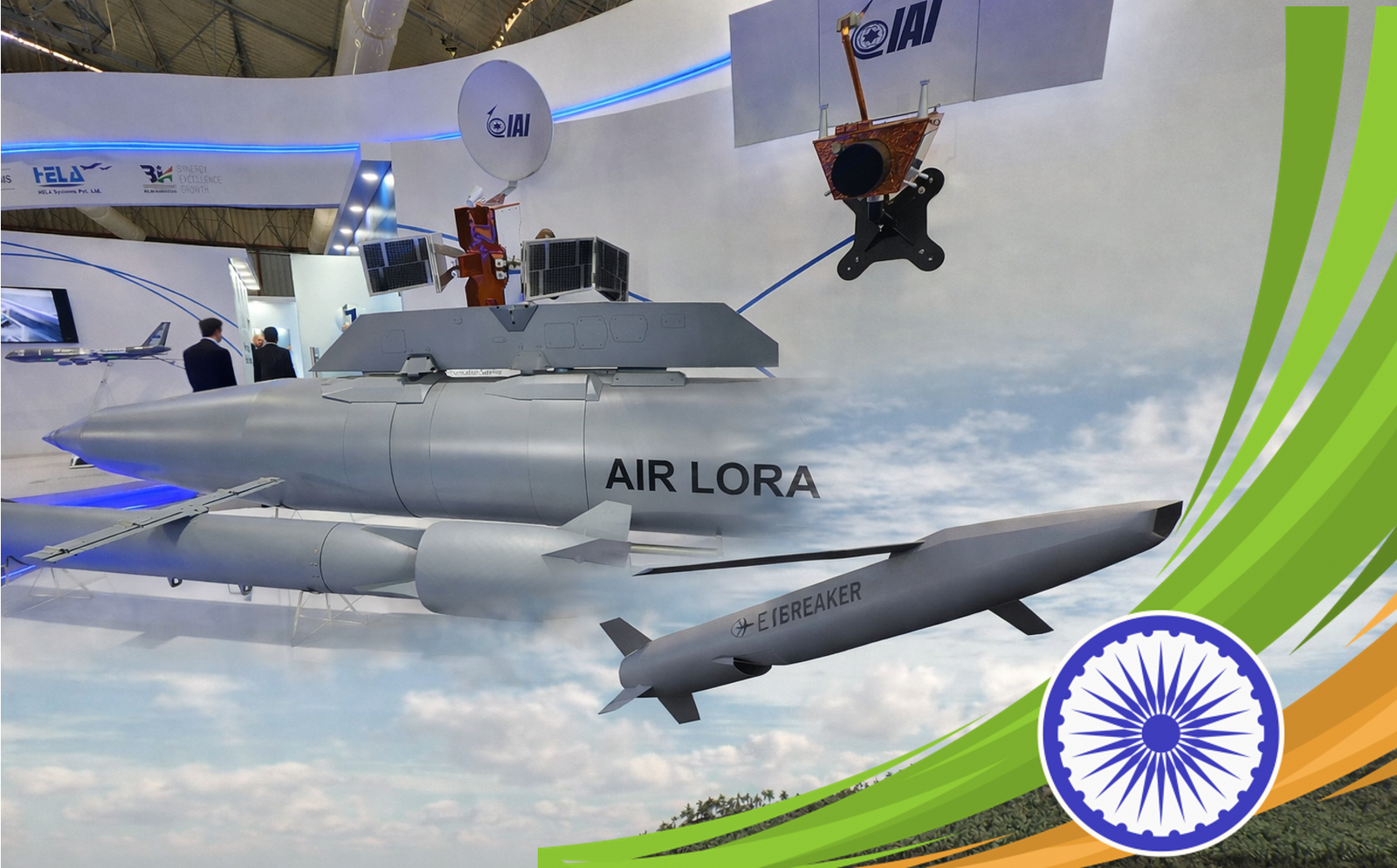
Having suffered on account of manned and unmanned aircraft during the last two wars against Pakistan, reports suggest that India may increasingly switch to missile warfare for the next one. Huge allocations are made for Brahmos, a missile programme developed with Russian collaboration. Plans indicate that Brahmos-ER, the upcoming version, will have a reach of around 800 km. Similarly, Brahmos-NG will have a speed of Mach 6-8, complicating the job of air defence interceptors; and reduced weight and dimensions to make it compatible with Tejas and other French platforms. Moreover, the Indian MoD is secretly working with the Israeli defence industry to procure Air-Lora ballistic and Icebreaker cruise missiles, worth billions of dollars.
Recent conflicts have demonstrated the Indian political leaderships’ capacity to push the IAF into conflict for electoral gains; even worse, the IAF invariably proceeds with inadequate homework. Consequently, in 2019 a fairly senior MiG-21 operator and his team were surprised by PAF’s electronic warfare. In 2025, overestimating the combination of Rafale and Meteor, they were bamboozled by PAF’s multi-domain operation. Given that the high-tech missiles operate at dangerously higher rungs of the escalation ladder, any miscalculation in this domain will annihilate humans on the ground, not the IAF pilots in the air. One can only hope and pray that better sense will prevail, and that the Indian leadership will deal with electoral challenges in the political domain.

Air Marshal Irfan Ahmad (Retd)
The writer is Director of Doctrine and Warfare at the Centre for Aerospace and Security Studies (CASS), Lahore.
Originally Published in The Frontier Post.
CASS LAhore

The Centre for Aerospace & Security Studies (CASS) was established in July 2021 to inform policymakers and the public about issues related to aerospace and security from an independent, non-partisan and future-centric analytical lens.
CASS Newsletter

@2025 – All Right Reserved with CASS Lahore.

- Home
- About Us
- Research Domains
- Publications
- Events
- Gallery
- Contact Us
@2021 - All Right Reserved. Designed and Developed by PenciDesign