


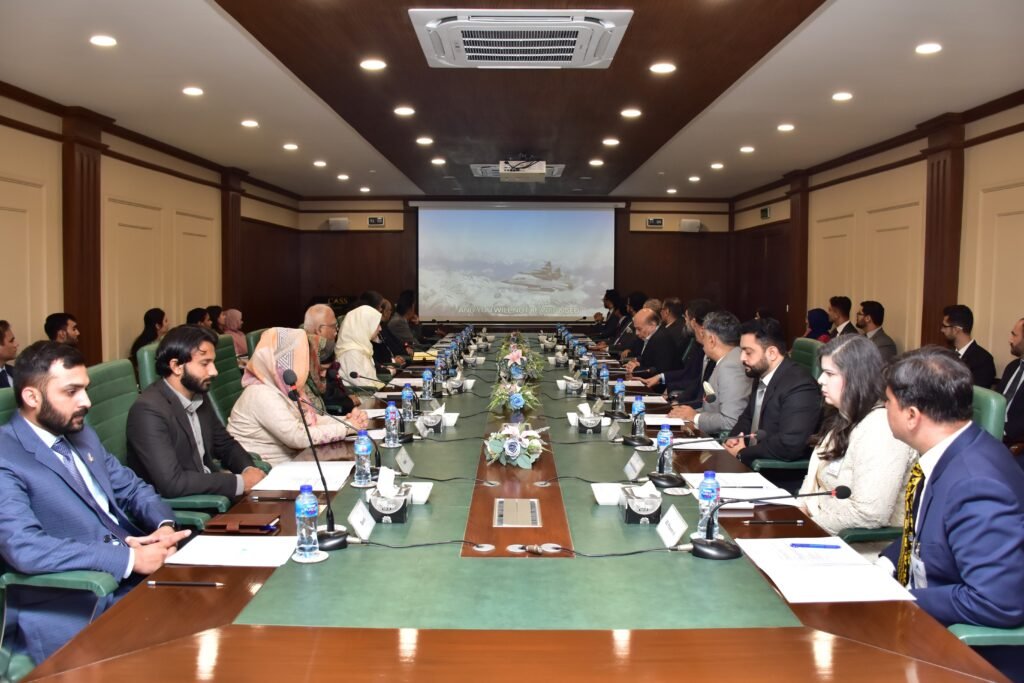
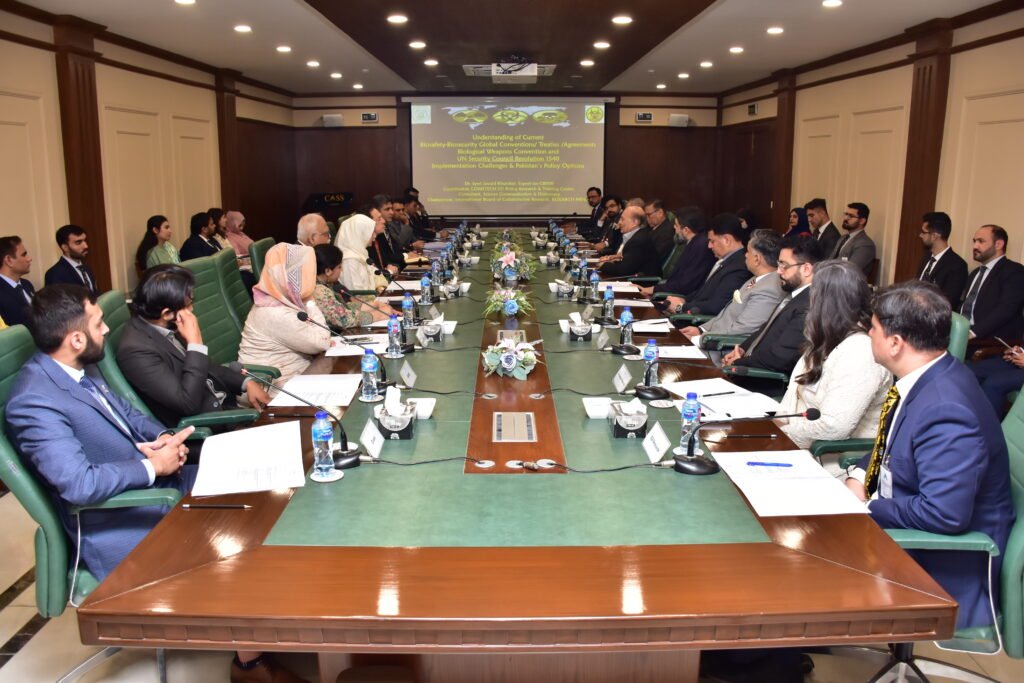
Roundtable Conference
Biological Risks, Global Conventions and Pakistan’s Options
November 5, 2025
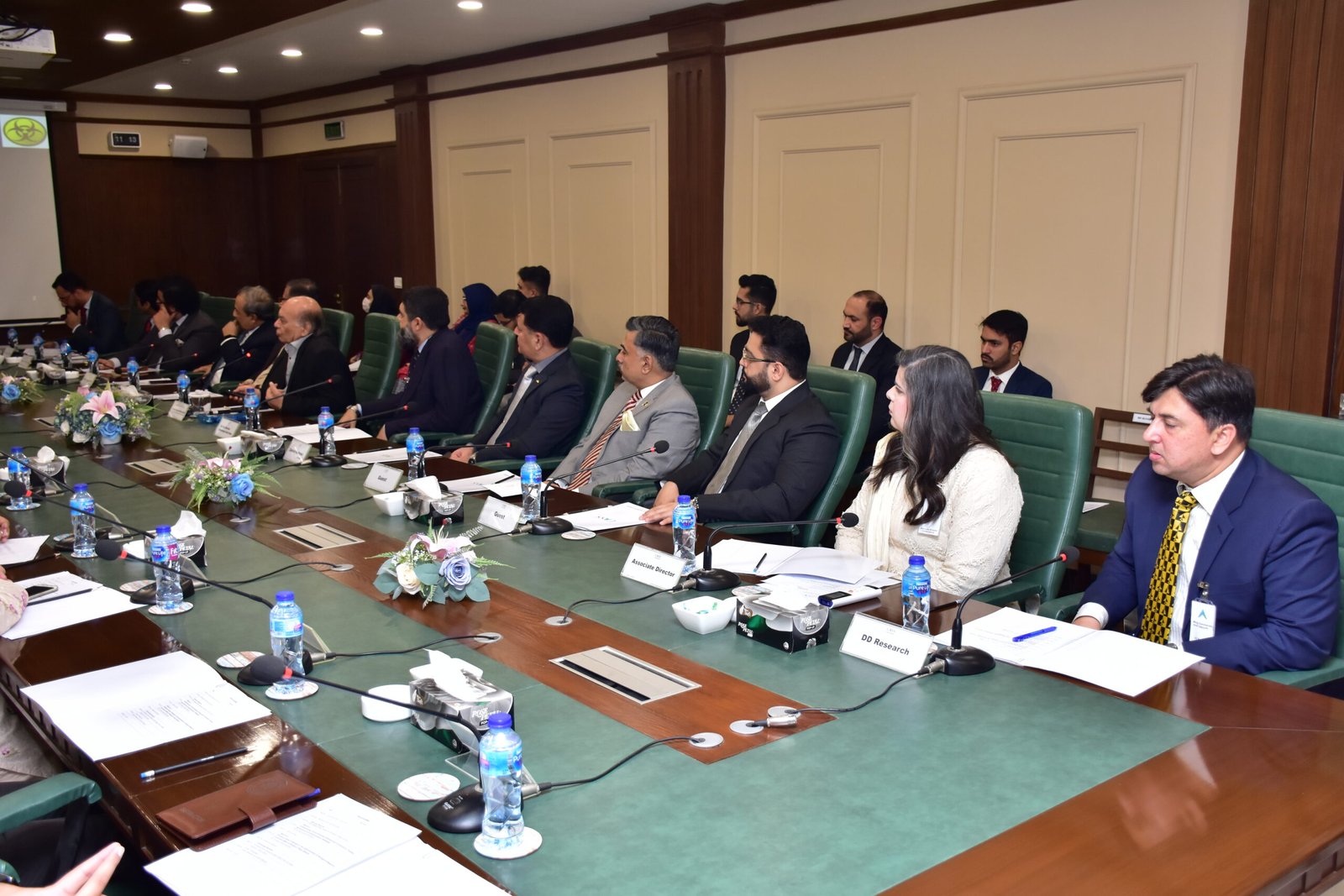
The roundtable explored emerging biological threats, global conventions like the BWC, and Pakistan’s policy measures to strengthen biosecurity. Discussions highlighted biosafety, dual-use risks, domestic preparedness, international engagement, and ethical governance as key components of national and global resilience.
About The Event
In a rapidly evolving security environment shaped by scientific innovation and global uncertainty, biological weapons have once again re-emerged as a critical contemporary challenge. Their inherent ambiguity, potential for covert use, and capacity to cause widespread disruption make them difficult to deter and attribute. Certain biological agents can inflict serious damage without provoking swift military action owing to lack of accountability, challenging deterrence and response strategies. Unlike nuclear or chemical weapons, biological agents can be deployed covertly, offering both strategic advantage and political deniability.
This year marks the 50th anniversary of the Biological Weapons Convention (BWC), the only legally binding treaty governing biological arms, and a pillar of the global non-proliferation regime. Although this treaty has guided international efforts for five decades, escalating biological threats reveal structural and political weaknesses, notably the absence of a verification mechanism and limitation in the existing confidence-building measures. Rapid biotechnological advances further complicate compliance, requiring vigilance and stronger commitment from all member states to uphold the treaty’s effectiveness.
Pakistan, as a responsible state party to the BWC, remains committed to upholding the peaceful applications of biological sciences and scientific advancements. It recognises the need for research and institutional cohesion to maintain national standards for biological safety and security that align with both global norms and domestic priorities.
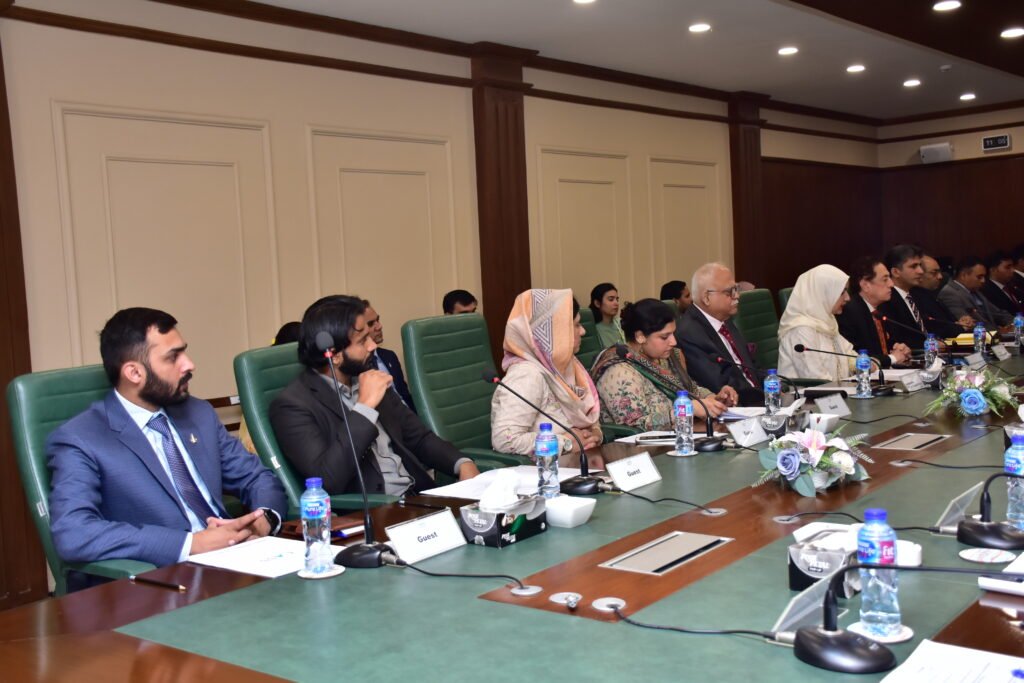
Against this backdrop, the Centre for Aerospace and Security Studies (CASS), Lahore, organised a roundtable discussion titled “Biological Risks, Global Conventions and Pakistan’s Options.” The guest speaker, Prof Dr Javaid Khurshid, Consultant Science, Communication, and Diplomacy at COMSTECH, provided expert insights into biosafety and biosecurity conventions, and the challenges in implementing the BWC amid emerging threats. By linking these issues to strategic and policy considerations, the even fostered informed discussion on how Pakistan can enhance preparedness, strengthen its national frameworks, and navigate evolving global biological security challenges.

Key Takeaways
- Pakistan’s Adherence to the Biological Weapons Convention (BWC)
Pakistan implements robust measures to prohibit and prevent the development or possession of biological weapons, ensuring full compliance with its obligations under the Convention.
- Existing Biosecurity Measures Provide a Foundation
Pakistan maintains a range of legislative and institutional measures, including the Drug Act 1976, Biosafety Guidelines 2005, and Disease Early Warning System (DEWS), providing a foundation for biosecurity while highlighting the need for continued strengthening.
- Accessibility and Danger of Biological Weapons
Biological weapons pose a greater risk than a hydrogen bomb because they require far fewer technical steps, such as contaminating water with bacteria, and could have devastating consequences.
- COVID-19 Reframed Health Security Worldwide
The COVID-19 pandemic showed that biological risks can no longer be treated as purely national concerns, as even advanced health systems proved vulnerable, making global cooperation essential.
- Emerging Technologies Intensify Biological Risk
Rapidly advancing technologies, particularly artificial intelligence and cyber tools, have introduced new biological vulnerabilities, emphasising the need to update legal frameworks to prevent misuse.
- Bioterrorism as a Security Challenge
Biosecurity concerns naturally highlight the threat of bioterrorism, where deliberate release of biological agents can cause disease, human deaths, crop losses, and widespread fear.
- Detection and Protection from Biological Threats
Strong vaccination programmes must be paired with sensitive disease recognition by frontline health professionals coupled with efficient connectivity between laboratories, enabling rapid reporting and timely communication with national and international authorities.
Policy Considerations
- Strengthen National Pathogen Risk Governance
A structured procedure for pathogen risk assessment that covers facilities, personnel, and material handling, supported by improved domestic production and secure storage of critical vaccines to close existing preparedness gaps should be introduced by Pakistan.
- Reform Life Science Education and Awareness
Pakistan must integrate confidence building measures (CBM) into biology and biotechnology curricula to ensure that future scientists gain a clear understanding of their ethical and professional responsibilities when handling rapidly advancing biological agents.
- Enhance Institutional Capacity and International Engagement
Pakistan needs to establish a dedicated authority to oversee CBM implementation, enabling universities to contribute to policymaking while drawing on international support to strengthen national biosecurity capacity.
- Advance Early Warning Systems and Emerging Bio-surveillance Tools
Pakistan’s disease detection architecture must be upgraded by linking laboratories more effectively and incorporating advanced technologies, including satellite-based monitoring and airport-centred biosafety measures, to identify threats at their earliest stages.
- Expand National and Regional Vaccine Preparedness
The manufacturing of essential vaccines in Pakistan needs to be scaled up in addition to creating a national or OIC-coordinated vaccine bank for maintaining reliable reserves for public use during emergencies.
- Reinvigorate Governance and Regional Cooperation in Biosecurity
Pakistan should focus on strengthening the BWC, integrating biosafety into national security and innovation planning, and promoting regional cooperation through OIC and COMSTECH-led preparedness mechanisms.
- Build a Skilled Bio Risk Workforce and Ethical Biotechnology Framework
A trained national workforce specialising in bio risk management should be developed by Pakistan together with strengthening ethical oversight of emerging biotechnologies so that safe innovation and responsible governance can advance in parallel.
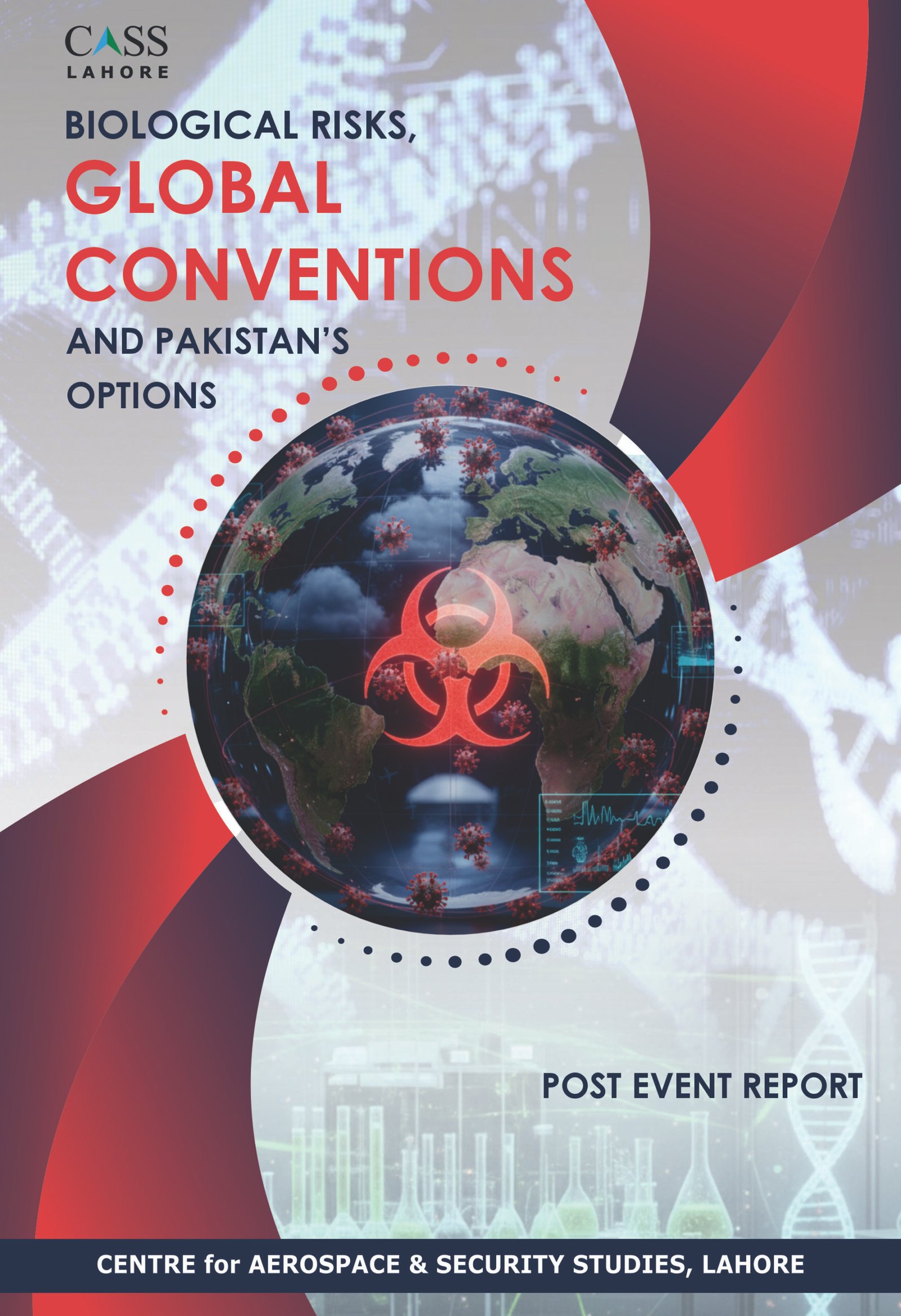

Post Event Report
A comprehensive report capturing expert analyses, strategic insights, key recommendations, media coverage, and event highlights.
Guest Speakers

Professor Dr Syed Javaid Khurshid
Consultant for Science Communication and Diplomacy
Dr Javaid Khurshid currently serves as the Consultant for Science Communication and Diplomacy at the Organization of Islamic Cooperation Ministerial Committee on Science and Technological Cooperation. He holds a doctorate in Radiopharmaceutical Chemistry from the University of the Punjab, Master’s in Organic Chemistry from the University of Karachi and an MS in Biochemistry from Ball State University, US. Dr Khurshid served the Pakistan Atomic Energy Commission for forty years in various key positions. He has also been a Visiting Faculty Member at leading institutions including the International Centre of Chemical and Biological Science and the National Defence University. Dr Khurshid is a fellow of both the Pakistan Nuclear Society and the Chemical Society of Pakistan. He was a member of the Inter Ministerial Committee on the Biological and Chemical Weapons Conventions. He has more than eighty publications in national and international journals, reflecting his extensive research contributions and expertise.

Event Chair
Air Marshal Asim Suleiman (Retd)
President, CASS Lahore

Event Coordinator
Ezba Walayat Khan
Research Assistant, CASS Lahore
Master of The Ceremony
Ezba Walayat Khan
Research Assistant, CASS Lahore





CASS LAhore

The Centre for Aerospace & Security Studies (CASS) was established in July 2021 to inform policymakers and the public about issues related to aerospace and security from an independent, non-partisan and future-centric analytical lens.
CASS Newsletter

@2025 – All Right Reserved with CASS Lahore.

- Home
- About Us
- Research Domains
- Publications
- Events
- Gallery
- Contact Us
@2021 - All Right Reserved. Designed and Developed by PenciDesign