


Indian theatre, in a frenzied attempt, has once again twisted the truth to create a distorted reality that would appease its masses. Three months after their humiliating defeat at the hands of the Pakistan Air Force (PAF), the Indian Air Chief Marshal (ACM) Amar Preet Singh made a preposterous and ludicrous claim regarding the alleged performance of the S-400 system during the May 2025 Pakistan-India war. His assertions are nothing but falsehoods and a distortion of reality to showcase an exaggerated view of the S-400’s performance.
While giving a military lecture at the Hindustan Aeronautics Limited Management Academy in Bengaluru, ACM Singh alleged that the S-400 system proved to be a game-changer that deterred the PAF aircraft from deploying their long-range air-to-ground weapons. He also added that the S-400 was ostensibly responsible for taking down at least five fighters and one large aircraft from a distance of 314 km. It boasts of having set a world record by supposedly securing the longest kill by a surface-to-air missile. His statements have been debunked by Pravin Sawhney, an Indian editor and journalist, due to the failure of substantial evidence as opposed to PAF’s announcements backed by credible satellite imagery. These are, therefore, outlandish claims that are nothing short of a public relations stunt intended to generate domestic applause and to divert the attention of the Indian masses away from the wreckage of its seven downed planes, among them its four prized Rafales.
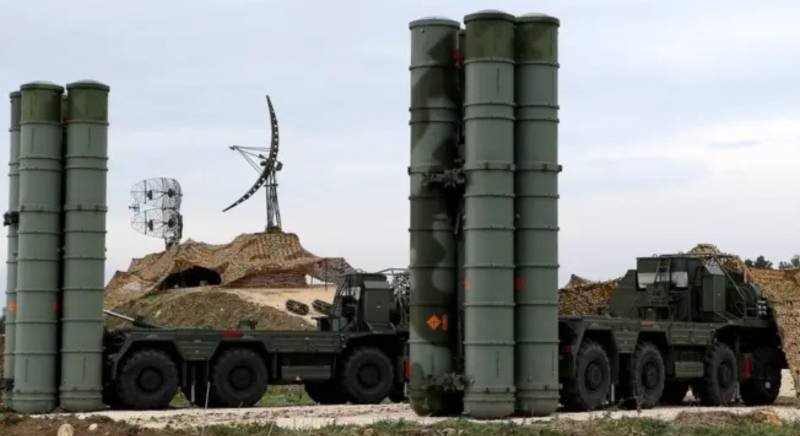
Considered to be Russia’s state-of-the-art air defence system (ADS) and dubbed one of the best ADS in the world, the S-400 provides a layered defence range. It is designed to target adversarial aircraft, cruise and ballistic missiles, and unmanned aerial vehicles. New Delhi signed a $5.5 billion deal with Russia in 2018 for five S-400 systems and is awaiting the delivery of the final two units, scheduled for 2026 and 2027. It is again in the negotiation stage for procuring more S-400 systems, exemplifying India’s voraciousness for acquiring military hardware to aid in its hegemonic aspirations. Referred to by India as Sudarshan Chakra, reminiscent of Lord Vishnu’s spinning circle weapon, the S-400 gave New Delhi a delusion of security, believing its mere presence would allow India to escalate conflict against Pakistan, prevail, and remain shielded from retaliation.
“India will not be able to get a replacement for its radar until 2027-28, making the system essentially unserviceable”
The May 2025 war took the air out of India’s heightened imagination. As was the case with the Rafales, the same proved to be true for the S-400: a potent machine in the hands of under-trained personnel, leading to results which were contrary to the Indian expectations. The Indian pursuit of more S-400 units, thus, may embolden Indian miscalculation and misadventures through a reinforced false sense of invulnerability. This overconfidence is again likely to lead to India’s downfall, as demonstrated in the May 2025 war. Pakistan remains fully prepared to counter any Indian threat owing to its efficacious training, well-integrated kill chain, and dynamic leadership.
During Zarb-e-Karrar, PAF successfully destroyed India’s S-400 batteries at Bhuj and Adampur by launching Chinese-made CM-400AKG hypersonic missiles from the JF-17 multirole fighters. As explained by PAF’s Air Vice Marshal Aurangzeb Ahmad during the tri-services news briefing held on 11 May 2025, these missiles had specifically targeted the S-400’s 92N6E Grave Stone fire-control radar, commonly referred to as the cheeseboard radar because of its array layout. This was an essential component in the operational effectiveness of the S-400 system, due to its primary role in detection, tracking, and guidance of missiles towards targets, as well as its resilience against jamming and interference. India will not be able to get a replacement for its radar until 2027-28, making the system essentially unserviceable.
Indian Prime Minister Narendra Modi visited the Air Force Station at Adampur on 13 May 2025 and stated in front of the S-400 Launcher Vehicle that India has gained unprecedented strength because of this system. Nevertheless, this visit was a vain attempt and a photo-op to convince the local and global audience that the S-400 system was not hit and remains intact. However, this incomplete display of the full S-400 system raised questions about the notable absence of the S-400’s high-value radar unit. This, therefore, was an inadvertent admission by India that the radar was fully neutralised by the PAF.
The truth is clear as day. India not only suffered the loss of its aircraft in May 2025 but also lost its self-appointed status as the regional net security provider, along with its dreams of creating an Akhand Bharat. In a flailing manner, it has been trying to hold onto false narratives and phoney lofty claims to take back its lost glory. However, it is a lost cause. The world has acknowledged the truth, which is contrary to the narratives peddled by India. No number of Indian hysterics and melodramas can mould reality into India’s illusion of victory.

Arooba Younas
The writer is a Research Assistant at the Centre for Aerospace and Security Studies (CASS), Lahore.
Originally Published in The Friday Times.
CASS LAhore

The Centre for Aerospace & Security Studies (CASS) was established in July 2021 to inform policymakers and the public about issues related to aerospace and security from an independent, non-partisan and future-centric analytical lens.
CASS Newsletter

@2025 – All Right Reserved with CASS Lahore.

- Home
- About Us
- Research Domains
- Publications
- Events
- Gallery
- Contact Us
@2021 - All Right Reserved. Designed and Developed by PenciDesign